
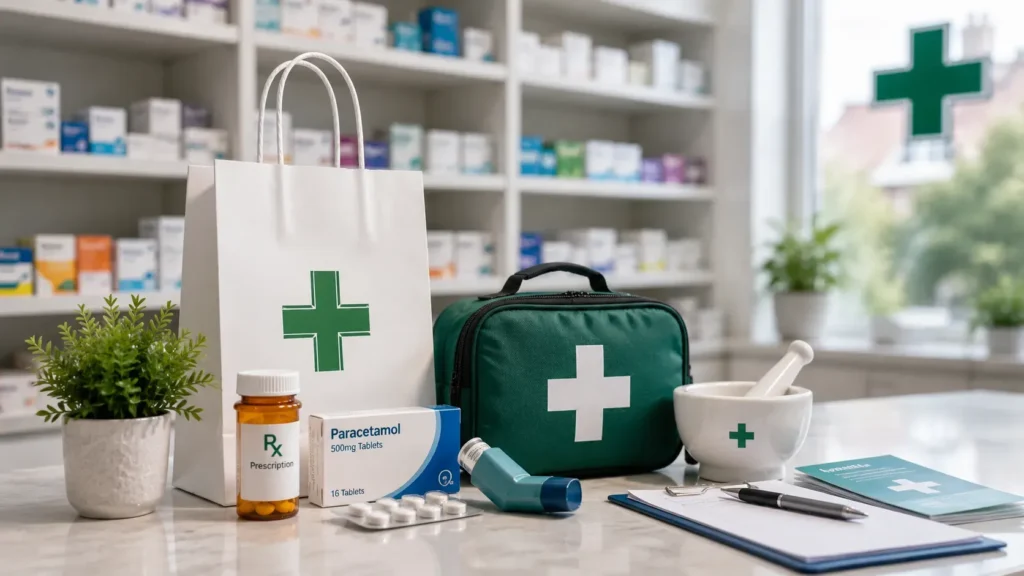
Community pharmacies can help with much more than collecting a prescription. Pharmacists can answer questions about medicines, advise on common health problems, provide NHS services such as Pharmacy First, support repeat prescriptions and explain when another healthcare service may be more appropriate.
The most useful pharmacy visit is often the one where you arrive with the right information and know what you want to ask. These ten practical tips can help you use community pharmacy services more effectively.
1. Keep an Up-to-Date List of Your Medicines
If you take several medicines, keep a current list that includes the medicine name, strength, dose and how often you take it. Include prescribed medicines, over-the-counter products and herbal remedies where relevant.
This can be particularly helpful when asking about side effects, buying a new over-the-counter treatment or discussing a change made by your GP or hospital team. Bringing the medicine packaging or showing a clear photo of the label can also help the pharmacist check exactly what you are taking.
2. Ask Questions When Something About a Medicine Is Unclear
Pharmacists are medicines specialists. The NHS says pharmacists can advise on how to use medicines, concerns about side effects and other medicine-related questions.
Useful questions might include:
- How and when should I take this medicine?
- Should I take it with food?
- What should I do if I miss a dose?
- What side effects should I look out for?
- Can I take this alongside my other medicines?
- How should I store it?
If the pharmacist cannot resolve the issue safely, they can advise whether you need to contact your GP, prescriber or another healthcare professional.
3. Order Repeat Prescriptions Before You Run Out
Running out of regular medicine can create unnecessary stress. NHS guidance recommends requesting repeat prescriptions in good time before you need them. You can usually request repeat medicines through the NHS App, the NHS website or the system used by your GP surgery.
The request still needs to be approved by your GP practice before it can be prepared by the pharmacy. Ordering early gives time for approval, dispensing and any stock issues to be resolved.
You can read more about the process in the NHS guide to ordering repeat prescriptions.
4. Check Which Pharmacy Your Electronic Prescription Is Going To
If you use electronic prescriptions, make sure your chosen pharmacy is correct. The NHS App allows many patients to choose or change the pharmacy that receives their prescriptions.
This is particularly useful if you have moved, changed your routine or want prescriptions sent somewhere more convenient. Be aware that changing your chosen pharmacy may not move a prescription that has already been issued.
For NHS App instructions, see choosing a pharmacy in the NHS App.
5. Use a Private Consultation Area for Sensitive Questions
You do not need to discuss a sensitive health concern at the counter where other people can hear. Pharmacies providing clinical services can use a private consultation area where appropriate.
If you want to discuss contraception, medicine side effects, a minor illness or another personal concern, ask whether you can speak to the pharmacist privately. Clear information helps the pharmacist give safer and more relevant advice.
6. Know When Pharmacy First May Be Relevant
NHS Pharmacy First allows participating community pharmacists in England to assess seven common conditions through defined clinical pathways. Depending on the assessment, the pharmacist may provide self-care advice, treatment, a prescription-only medicine where the pathway allows it, or referral to another healthcare service.
The seven established pathways cover impetigo, infected insect bites, earache in eligible children, sore throat, sinusitis, uncomplicated urinary tract infection in eligible women, and shingles. Age criteria apply.
For a full explanation of the pathways and eligibility, read how NHS Pharmacy First works.
7. Do Not Assume Every Infection Needs Antibiotics
Some Pharmacy First pathways can include antibiotics when the clinical criteria support them, but antibiotics are not automatically supplied. Many common infections are viral or improve without antibiotics.
If you are specifically wondering when pharmacists can supply antibiotics through Pharmacy First, see can pharmacists supply antibiotics through NHS Pharmacy First?.
8. Return Unwanted or Out-of-Date Medicines to a Pharmacy
The NHS advises returning unwanted or out-of-date medicines to a pharmacy for safe disposal rather than putting them in household waste or flushing them down the toilet.
Keeping old medicines at home can also cause confusion, especially when doses or treatments have changed. Regularly checking your medicine cupboard can make it easier to identify items that are no longer needed.
9. Check Service Availability Before Making a Special Journey
Not every pharmacy provides exactly the same NHS or private services. Availability can also vary by day, staffing and appointment capacity.
If you are travelling specifically for a clinical service, vaccination, blood pressure check, contraception service or another appointment-based service, check the pharmacy’s current availability first. This can save an unnecessary journey and helps ensure the right trained team member is available.
10. Know When a Pharmacy Is Not the Right Service
Community pharmacy is useful for many common health problems and medicine questions, but it is not a replacement for every part of the NHS.
Use NHS 111 when you need medical help now but are unsure which service is appropriate. Contact your GP for problems that need ongoing medical assessment, investigation or management. Call 999 for a life-threatening emergency.
The NHS explains that if a pharmacist cannot help directly, they can refer or direct you to another healthcare professional. You can read more in the NHS guide to how pharmacies can help.
A Simple Checklist Before Your Next Pharmacy Visit
- Bring or know the names of your current medicines.
- Know what question you want answered.
- Mention allergies and important medical conditions.
- Bring your prescription details or NHS App information if the query is prescription-related.
- Ask for a private conversation if the issue is sensitive.
- Explain how long symptoms have been present and whether they are changing.
- Ask what to do if symptoms do not improve.
A few minutes of preparation can make it easier for the pharmacist to understand the problem and give you clear next-step advice.
Using Community Pharmacy as Part of Your Everyday Healthcare
Community pharmacy works best as part of the wider healthcare system. Pharmacists can help with medicines, common health concerns, NHS Pharmacy First and practical prescription support, while also recognising when you need GP, urgent or emergency care.
If you live locally and want information about current NHS and private services, prescriptions or pharmacy support, visit Biscot Pharmacy, your local pharmacy in Luton.
Information note: This article provides general information about community pharmacy services in England and does not replace individual medical advice. Service availability and eligibility can vary.


 the prescription app


