
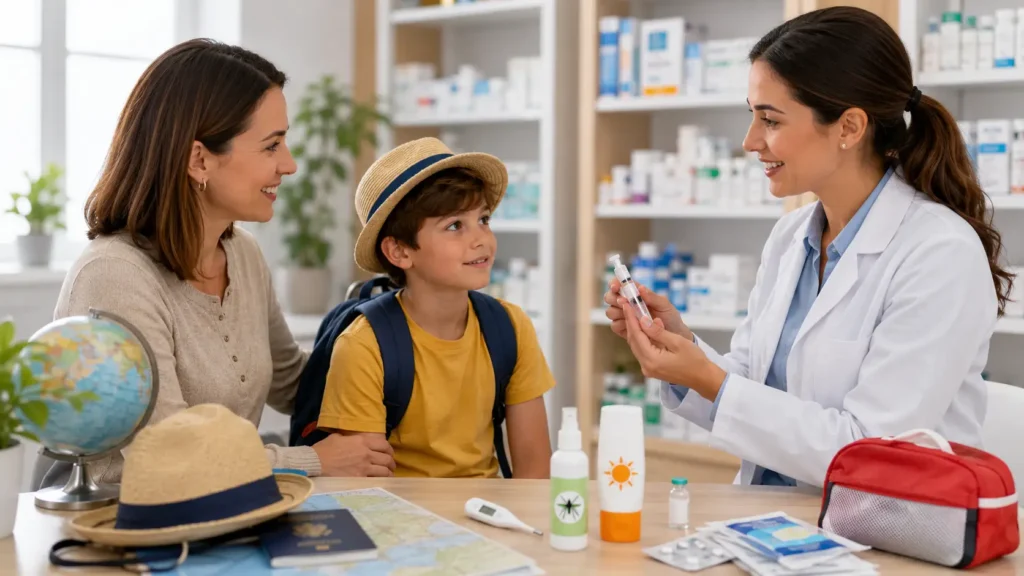
Travelling abroad with children can be exciting, especially when visiting family, going on holiday, attending a wedding, travelling for pilgrimage or exploring a new country together. However, when children are travelling to high-risk countries, health preparation becomes even more important. Children may be more vulnerable to dehydration, insect bites, stomach illness, animal contact, heat, infections and disruption to routine.
If you are travelling from Luton, visiting a travel clinic in Luton before your trip can help you understand which vaccines, malaria precautions, mosquito protection and safety steps may be suitable for your child. Biscot Pharmacy Travel Clinic & Weight Loss Centre can provide travel health advice based on your child’s age, destination, medical history, vaccine record and planned activities.
What Counts as a High-Risk Country for Children?
A high-risk country does not always mean a country is unsafe to visit. In travel health, it usually means there may be higher risks of certain infections, food and water illness, mosquito-borne diseases, rabies, malaria, limited healthcare access or vaccine-preventable diseases compared with the UK.
For children, the risk can depend on where they are going, how long they are staying and what they will be doing. A travel vaccination clinic in Luton can help parents understand whether their child’s destination needs extra preparation, especially for travel to parts of Asia, Africa, South America, the Middle East or rural and remote areas.
Why Children Need Travel Health Advice Before High-Risk Trips
Children are not simply smaller adults. Their immune systems, medicine doses, dehydration risk, vaccine eligibility and ability to describe symptoms can be different from adults. Younger children may not explain when they feel unwell, and older children may ignore symptoms during a busy family trip.
A travel clinic in Luton can help parents think through practical risks before departure. This includes vaccine timing, malaria prevention, mosquito protection, food safety, safe drinking water, heat illness, animal bite precautions, travel medicines and when to seek medical help abroad.
When Should Parents Book Travel Vaccination Advice?
Parents should arrange travel health advice as early as possible. NHS guidance says travellers should try to get advice from a travel health professional at least 4 to 6 weeks before travelling, because some vaccines need multiple doses and some take time to build protection.
If you are travelling soon, you should still contact a travel vaccination clinic in Luton. TravelHealthPro says last-minute advice is still useful if time is short, so even families with urgent travel plans may still benefit from vaccine advice, malaria guidance and practical safety support.
Why Your Child’s Age Matters
Travel vaccine advice for children depends heavily on age. Some vaccines are only suitable above certain ages, some require different schedules, and some children may already have partial protection from routine UK vaccinations. Babies, toddlers, school-age children and teenagers may all need different advice.
When you visit a travel clinic in Luton, bring your child’s age, vaccine history and travel details. This helps the pharmacist advise more accurately and explain whether any travel vaccines, boosters or GP checks may be needed before your trip.
Checking Routine Childhood Vaccinations
Before travelling abroad, parents should check that children are up to date with routine UK vaccinations. This may include vaccines such as MMR, tetanus, diphtheria, polio and other routine childhood immunisations depending on the child’s age.
A travel vaccination clinic in Luton can help parents understand why routine vaccines matter before international travel. If your child’s vaccine record is incomplete or unclear, you may be advised to contact your GP surgery before departure.
Travel Vaccines Children May Need
The vaccines a child may need depend on the destination, travel length, activities, age and vaccine history. Common travel vaccines that may be discussed for higher-risk countries include hepatitis A, typhoid, tetanus, diphtheria and polio booster, hepatitis B, rabies, Japanese encephalitis, cholera, meningitis ACWY or yellow fever where relevant.
A travel clinic in Luton can review your child’s itinerary and explain which vaccines may be recommended or required. Not every child needs every vaccine, which is why personalised travel health advice is important.
Hepatitis A and Food-Related Risks
Hepatitis A can spread through contaminated food, water or poor hygiene. Children may be at higher risk if they eat local food, stay with family, travel to rural areas or put hands and objects near their mouth more often.
If your child is visiting a destination where hepatitis A risk is higher, a travel vaccination clinic in Luton can advise whether vaccination should be considered. Parents should also focus on hand hygiene, safe food choices and drinking safe water.
Typhoid and Water Safety
Typhoid can spread through contaminated food and water. Children may become unwell more quickly if they develop diarrhoea, vomiting or dehydration while abroad. This can be particularly concerning in hot countries or places with limited healthcare access.
A travel clinic in Luton can advise whether typhoid vaccination may be suitable for your child’s destination and age. Even if vaccinated, food and water safety remains important because vaccines do not protect against every stomach infection.
Rabies and Animal Bite Risk
Rabies is a serious infection spread through bites, scratches or saliva from infected animals. Children can be at higher risk because they may be more likely to touch animals, play with dogs or cats, or not tell adults about minor scratches.
If your family is travelling to an area where rabies is present, a travel vaccination clinic in Luton can help assess whether rabies vaccination should be discussed. Parents should teach children not to touch dogs, cats, monkeys, bats or other animals while abroad, even if they seem friendly.
What to Do If a Child Is Bitten or Scratched Abroad
If a child is bitten, scratched or licked on broken skin by an animal abroad, wash the wound thoroughly with soap and running water and seek urgent medical advice. This is important even if the child has had rabies vaccination before travel, because further treatment may still be needed.
A travel clinic in Luton can explain animal bite precautions before your trip and help parents understand why urgent medical care is needed after possible rabies exposure.
Malaria Risk in Children
Malaria can be serious, especially in children. Risk depends on the country, region, season, accommodation and activities. Some families may be visiting relatives in areas where they feel familiar, but children born or living in the UK may not have the same immunity as people living in malaria-risk areas.
A travel vaccination clinic in Luton can assess whether malaria tablets may be recommended for your child. If tablets are needed, the pharmacist can explain dosing, timing and practical points, while also reminding families that bite prevention remains essential.
Mosquito Bite Prevention for Children
Mosquitoes can spread illnesses such as malaria, dengue, chikungunya and Zika in some destinations. Some mosquitoes bite at night, while others bite during the day, so protection may be needed throughout the day and evening.
A travel clinic in Luton can advise parents on mosquito bite prevention for children, including suitable repellents, long sleeves and trousers, mosquito nets, screened accommodation and extra care around sunrise, sunset or high-risk areas.
Dengue and Daytime Mosquitoes
Dengue is found in many tropical and subtropical countries, and the mosquitoes that spread it often bite during the day. This means children need protection while sightseeing, playing outside, visiting family, attending events or walking around busy towns.
A travel vaccination clinic in Luton can explain why mosquito protection is important even when malaria tablets are not needed. Parents should use bite prevention consistently rather than only at night.
Yellow Fever and Certificate Requirements
Some countries require proof of yellow fever vaccination, either because the disease is a risk there or because the traveller is arriving from a yellow fever risk country. This can affect families travelling through multiple countries or stopping over in certain areas.
A travel clinic in Luton can help parents check whether yellow fever vaccination or a certificate may be relevant for their child’s route. Yellow fever vaccine suitability depends on age, health history and destination rules, so early advice is important.
Meningitis ACWY for Certain Travel
Meningitis ACWY may be relevant for some children depending on the destination, planned activities or pilgrimage travel such as Hajj and Umrah. Crowded settings can increase the spread of some infections, so vaccine requirements and recommendations should be checked early.
If your child is travelling for pilgrimage, school trips, group travel or to certain higher-risk settings, a travel vaccination clinic in Luton can help review whether meningitis ACWY advice is relevant.
Food Safety for Children Abroad
Food is one of the most common causes of travel-related illness. Children may be tempted by street food, snacks, ice cream, fruit juices or buffet foods, but hygiene standards can vary. Younger children may also put hands or objects in their mouth more often.
A travel clinic in Luton can provide food safety advice before travel. Parents should choose freshly cooked food, avoid food that has been left out for long periods, wash hands often, use hand sanitiser where needed and be careful with raw or undercooked foods.
Safe Drinking Water and Dehydration
In some destinations, tap water may not be safe to drink. Children can become dehydrated more quickly than adults, especially if they have diarrhoea, vomiting, fever or are travelling in hot weather.
A travel vaccination clinic in Luton can advise parents on safe drinking water, oral rehydration sachets and what to do if a child develops stomach symptoms. In higher-risk areas, families may need to use sealed bottled water, safe treated water or boiled water depending on local advice.
Traveller’s Diarrhoea in Children
Traveller’s diarrhoea can be more worrying in children because dehydration can happen quickly. Parents should watch for reduced urination, dry mouth, sunken eyes, unusual drowsiness, fast breathing or a child who cannot keep fluids down.
A travel clinic in Luton can help parents prepare before travelling by discussing oral rehydration, safe food choices and when to seek medical help. Do not delay medical care if a child is very young, very drowsy, dehydrated or has blood in the stool.
Heat, Sun and Children
Hot weather can affect children quickly. TravelHealthPro notes that babies and very young children are more vulnerable to higher temperatures. Heat exhaustion, sunburn and dehydration can happen during sightseeing, beach days, family visits, outdoor events or long journeys.
A travel vaccination clinic in Luton can provide practical heat safety advice before travel. Parents should use high-factor sunscreen, hats, shade, regular fluids, light clothing and rest breaks, especially during the hottest part of the day.
Children with Asthma, Allergies or Long-Term Conditions
Children with asthma, allergies, diabetes, epilepsy, eczema, immune system conditions or other long-term health needs may require extra preparation. Heat, dust, food changes, infections, travel stress and disrupted routines can affect symptoms.
If your child has a medical condition, a travel clinic in Luton can provide general travel health advice, but you may also need advice from your GP, specialist nurse or hospital team before departure. Make sure medicines, action plans and emergency contacts are ready before travel.
Travelling with Children’s Medicines
Parents should pack enough medicine for the full trip, plus extra in case of delays. Keep medicines in original packaging where possible and carry prescriptions or medication lists if needed. Some medicines may have restrictions in other countries, so check before travel.
A travel vaccination clinic in Luton can remind parents to plan medicine supplies carefully, especially for inhalers, allergy medicines, insulin, epilepsy medicines, eczema creams, antibiotics, pain relief and regular prescriptions.
Travel Insurance for Children
Comprehensive travel insurance is important for families, especially when travelling to higher-risk countries. TravelHealthPro advises families to research destination health facilities and ensure they have comprehensive travel insurance that covers planned activities and medical conditions.
Before travelling, ask a travel clinic in Luton what health risks to consider, then check that your travel insurance covers children, existing conditions, emergency care, hospital treatment and repatriation if needed.
Visiting Friends and Relatives Abroad
Children visiting friends and relatives abroad may stay in local homes, eat local food, travel to rural areas and spend longer at the destination than typical tourists. Families may feel confident because they know the country, but health risks can still apply.
A travel vaccination clinic in Luton can help families prepare for visiting relatives in higher-risk countries. This is especially important for children born or raised in the UK who may not have the same immunity or exposure history as local children.
School Trips and Group Travel
Children travelling with schools, sports teams, youth groups or faith groups may have busy itineraries and shared accommodation. Parents should check vaccine requirements, emergency contacts, medication arrangements, insurance and what happens if the child becomes unwell abroad.
A travel clinic in Luton can help parents review vaccine and safety advice before group travel. If the school or organiser provides a health form or destination checklist, bring it to the appointment.
What to Pack in a Child Travel Health Kit
A child travel health kit may include regular medicines, oral rehydration sachets, child-appropriate pain relief, thermometer, plasters, antiseptic wipes, hand sanitiser, insect repellent, sunscreen, after-bite care, allergy medicines and copies of medical documents.
When visiting a travel vaccination clinic in Luton, ask what is suitable for your child’s age, destination and medical history. Avoid giving children medicines that are not appropriate for their age or weight.
What to Bring to a Children’s Travel Health Appointment
To get the most accurate advice, bring your child’s vaccine record, travel dates, destination, planned activities, accommodation details, medical history, allergy information and a list of medicines. If the trip includes rural stays, animal contact, pilgrimage, school travel or multiple countries, mention this clearly.
A travel clinic in Luton can give better advice when parents provide full details. Even small details, such as staying with relatives, visiting farms or travelling during rainy season, can affect recommendations.
When to Seek Medical Help Abroad
Parents should seek medical help abroad if a child has breathing difficulty, severe dehydration, persistent vomiting or diarrhoea, high fever, confusion, severe headache, stiff neck, rash, animal bite, severe allergic reaction, blood in stool, worsening asthma or symptoms that are rapidly getting worse.
A travel vaccination clinic in Luton can explain warning signs before you go, but parents should also identify local healthcare facilities and emergency contacts at the destination.
Why Choose Biscot Pharmacy Before Travelling with Children?
Biscot Pharmacy Travel Clinic & Weight Loss Centre supports families in Luton with pharmacy-led travel health advice. The team can help parents understand vaccine needs, malaria risk, mosquito protection, food and water safety, medicine planning and other precautions before travelling with children.
If you are looking for a travel clinic in Luton before taking your child to a high-risk country, Biscot Pharmacy can provide local, practical travel health support based on your family’s destination and circumstances.
Book Children’s Travel Health Advice in Luton
If your child is travelling to a high-risk country, do not leave health preparation until the last minute. Vaccines, malaria advice, food safety, mosquito protection, medicine planning and insurance can all make a difference.
Contact Biscot Pharmacy Travel Clinic & Weight Loss Centre on 01582 457709 or visit 157 Biscot Rd, Luton, LU3 1AW to arrange advice from a travel vaccination clinic in Luton before your child travels abroad.
FAQs About Children Travelling to High-Risk Countries
Do children need travel vaccines before visiting high-risk countries?
Some children may need travel vaccines depending on age, destination, vaccine history, length of stay and planned activities. A travel health consultation can help assess what may be suitable.
When should I book travel vaccines for my child?
You should try to get travel health advice at least 4 to 6 weeks before travel because some vaccines need multiple doses or time to build protection.
Can children take malaria tablets?
Some children can take malaria tablets, but suitability and dose depend on age, weight, destination and medical history. A travel health professional can advise what may be appropriate.
How can I protect my child from mosquito bites abroad?
Use suitable insect repellent, long clothing where practical, mosquito nets if needed, screened accommodation and bite prevention during both day and night depending on destination risks.
What should I do if my child gets diarrhoea abroad?
Encourage fluids and oral rehydration where suitable. Seek medical help if the child is very young, dehydrated, drowsy, unable to keep fluids down, has blood in the stool or symptoms are severe.
Should I bring my child’s vaccine record to the appointment?
Yes. Bringing your child’s vaccine record helps the pharmacist check what they have already had and what may still need to be considered before travel.
Is travel insurance important for children?
Yes. Families should have comprehensive travel insurance that covers children, medical conditions, planned activities, emergency treatment and repatriation if needed.
Where can I get children’s travel health advice in Luton?
Biscot Pharmacy Travel Clinic & Weight Loss Centre provides travel health advice in Luton. The pharmacy is located at 157 Biscot Rd, Luton, LU3 1AW, and can be contacted on 01582 457709.



 the prescription app


