
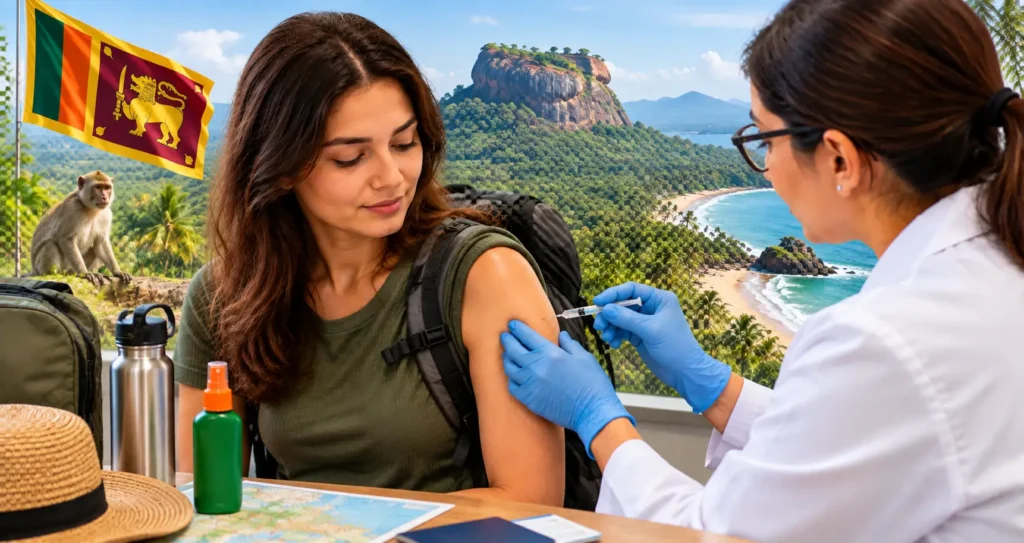
Sri Lanka travel vaccines should be planned around your actual itinerary, not a one-size-fits-all checklist. The places you will visit, how long you will stay, rural or urban travel, accommodation, planned activities, animal contact, medical history and access to healthcare can all change the advice.
If you are looking for Sri Lanka travel vaccines in Luton, Biscot Pharmacy Travel Clinic can review your route, vaccination history and individual health factors before recommending what may be appropriate.
Start with your itinerary and timing
TravelHealthPro recommends checking destination-specific health advice before travel, while FCDO advises reviewing Sri Lanka vaccine recommendations at least 8 weeks before departure. If you are travelling sooner, do not assume it is too late to ask for advice: the available options will depend on the time remaining, your previous vaccinations and your individual risk.
Before your appointment, write down your full route, travel dates, accommodation and planned activities. Travel Health Checklist Before You Fly can help you prepare the information that makes a travel-health assessment more specific.
Check your routine UK vaccinations
TravelHealthPro advises all travellers to be up to date with routine UK vaccinations and boosters according to age, medical history and individual risk. A pre-travel appointment is a useful opportunity to check records such as MMR and tetanus/diphtheria/polio protection before looking at additional destination-specific vaccines.
Which travel vaccines may be considered for Sri Lanka?
There is no single vaccine list that applies to every visitor. Current TravelHealthPro guidance places some vaccines in risk-based categories, meaning the decision depends on the traveller and itinerary.
Depending on your circumstances, a travel-health professional may discuss hepatitis A, hepatitis B, typhoid, rabies or Japanese encephalitis. Other vaccines, including cholera or chikungunya vaccination, are relevant only in particular risk situations. The important point is that the recommendation is based on exposure risk, not simply the country name.
For a broader explanation of how destination and traveller factors change recommendations, see Travel Vaccines for First-Time Travellers.
Mosquito-borne disease: bite prevention still matters
TravelHealthPro currently states that there is no malaria risk in Sri Lanka. That does not make mosquito precautions optional. Dengue, chikungunya and Zika are among the mosquito-borne infections relevant to Sri Lanka, and Japanese encephalitis is also present.
Use an effective insect repellent, wear clothing that covers exposed skin where practical, choose screened or air-conditioned accommodation when possible and use a mosquito net if sleeping areas are not adequately screened. Different mosquitoes bite at different times, so protection should not be limited to the evening.
Food and water precautions
Food and water hygiene is important because infections such as hepatitis A, typhoid and travellers’ diarrhoea can be linked to contaminated food or water. Vaccination does not replace careful food and water choices.
- Wash your hands regularly with soap and water, especially before eating.
- Choose food that is thoroughly cooked and served hot.
- Use safe drinking water where local water quality is uncertain.
- Be cautious with ice if you cannot be confident about the water used to make it.
- Take care with raw or undercooked foods and items that may have been left standing.
Animal bites and rabies
Rabies is considered a risk in Sri Lanka. Avoid contact with dogs, cats, monkeys, bats and other mammals, even when they appear healthy or familiar with people.
After a bite, scratch or saliva exposure to broken skin, the eyes, nose or mouth, wash the area thoroughly and seek urgent medical assessment locally. Do this even if you had rabies vaccination before travel. Pre-exposure vaccination can simplify post-exposure treatment, but it does not remove the need for treatment after a possible exposure.
Heat, hydration and practical health planning
Hot and humid conditions can increase the risk of dehydration and heat-related illness, particularly during long days outdoors. Plan regular fluids, use shade where possible and protect your skin from strong sun. If you become unwell with persistent vomiting, severe diarrhoea, marked weakness, confusion or signs of dehydration, seek medical care.
Travelling with a long-term condition or regular medicines
If you have a long-term medical condition, check that you have appropriate travel insurance and enough medicine for the journey. Carry medicines in suitable packaging, keep a copy of your prescription or medicine list and check current rules for taking medicines into Sri Lanka before departure.
Biscot Pharmacy’s travel health checklist also covers medicine planning, insurance and other practical steps before you fly.
Current entry and certificate checks
Travel rules can change, so check FCDO and Sri Lankan official guidance shortly before travel. Sri Lanka itself has no yellow-fever risk, but current guidance includes a yellow-fever vaccination certificate requirement for some travellers arriving from, or in certain circumstances transiting through, countries with yellow-fever transmission risk.
Do not use a vaccine list as a substitute for entry-rule checks. Do I Need Travel Vaccinations Before Flying? explains the difference between health recommendations and legal entry requirements.
When to arrange a Sri Lanka travel-health assessment in Luton
Arrange advice as early as practical and bring your full itinerary, travel dates, vaccination history, regular medicines and relevant medical information. A destination-based assessment is especially useful if you are visiting rural areas, staying for longer, travelling during monsoon periods, planning outdoor or animal-contact activities, visiting friends or relatives, or combining Sri Lanka with other countries.
For local support, Biscot Pharmacy Travel Clinic in Luton can review your trip and explain which vaccinations and precautions may be appropriate. A consultation does not guarantee that a particular vaccine, medicine or certificate will be supplied; recommendations depend on current guidance and your individual assessment.
Frequently Asked Questions
What vaccines should I check before travelling to Sri Lanka?
Check that your routine UK vaccinations are up to date first. Depending on your itinerary, length of stay, activities, accommodation, health history and access to medical care, a travel-health professional may also discuss vaccines such as hepatitis A, hepatitis B, typhoid, rabies or Japanese encephalitis. Some other vaccines are only relevant in specific circumstances, so there is no single vaccine list for every traveller.
What mosquito-bite precautions should I take in Sri Lanka?
Mosquito-bite prevention matters even though TravelHealthPro currently lists no malaria risk in Sri Lanka. Dengue, chikungunya and Zika are among the mosquito-borne infections relevant to travellers. Use an effective insect repellent, cover exposed skin when practical, choose screened or air-conditioned accommodation where possible and use a mosquito net if sleeping areas are not adequately screened.
What food and water precautions should I follow?
Use careful hand hygiene, choose food that is thoroughly cooked and served hot, and use safe drinking water where water quality is uncertain. Take care with ice, raw or undercooked foods and food that may have been left standing. Food and water precautions remain important even when vaccination has been given.
Does my itinerary change the vaccine advice?
Yes. Advice can change according to the places you visit within Sri Lanka, whether you stay in cities or rural areas, trip length, accommodation, season, animal contact, outdoor activities, work or volunteering, and how quickly you could reach reliable medical care.
How early should I arrange travel vaccinations?
Arrange travel-health advice as early as possible. FCDO advises checking Sri Lanka vaccine recommendations at least 8 weeks before travel. If departure is closer, it can still be worth seeking advice because some protection or practical risk-reduction measures may still be possible.
Important
This article provides general travel-health information and does not replace an individual clinical assessment. Recommendations and entry rules can change. Check current TravelHealthPro and FCDO advice close to departure, and seek personalised advice where appropriate.


 the prescription app


