
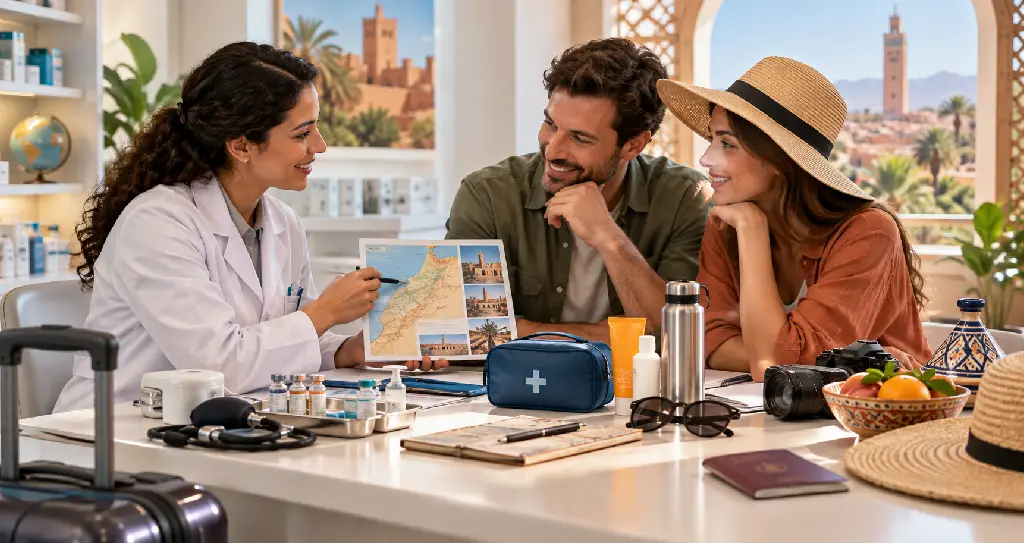
Morocco travel health advice should be based on your actual itinerary rather than a one-size-fits-all vaccine list. Your route, length of stay, accommodation, planned activities, animal contact, medical history and access to healthcare can all change the advice.
If you are planning a trip from Luton, Biscot Pharmacy Travel Clinic in Luton can review your travel dates, vaccination history and individual risk factors before advising on the next steps.
Start with your itinerary and timing
FCDO advises checking Morocco vaccine recommendations at least 8 weeks before travel. TravelHealthPro also recommends arranging travel-health advice as early as possible, ideally 4 to 6 weeks before departure where possible. If you are travelling sooner, it can still be worth seeking advice because some vaccinations and practical precautions may still be possible.
Before your appointment, note your full route, stopovers, travel dates and planned activities. Travel Health Checklist Before You Fly can help you prepare.
Check your routine UK vaccinations
TravelHealthPro advises all travellers to be up to date with routine UK vaccinations and boosters according to age, medical history and individual risk. A travel-health appointment is a useful opportunity to check routine protection before considering destination-specific vaccines.
Travel vaccines that may be considered for Morocco
There is no single vaccine list for every traveller. Current TravelHealthPro guidance recommends hepatitis A, tetanus and typhoid for most travellers to Morocco. Other vaccines, including hepatitis B and rabies, may be considered for some travellers depending on itinerary, activities, length of stay, health history and access to care.
For hepatitis B, factors such as possible exposure to blood or body fluids, medical or dental treatment abroad, longer stays or higher-risk activities can affect the decision. For rabies, long stays, animal contact, cycling or running, and travel to areas where prompt post-exposure treatment may be hard to access can increase the case for pre-exposure vaccination.
Food and water precautions
Food and water hygiene is important in Morocco because infections such as hepatitis A and typhoid can be linked to contaminated food or water. Vaccination does not replace careful food and water choices.
- Wash hands regularly with soap and water.
- Choose food that is thoroughly cooked and served hot.
- Use safe drinking water where local water quality is uncertain.
- Take care with ice if you cannot be confident about the water used to make it.
- Be cautious with raw or undercooked food and food that may have been left standing.
Animal bites and rabies
Rabies is considered a risk in Morocco and has been reported in domestic animals. Avoid contact with dogs, cats, monkeys, bats and other mammals, even when they appear healthy.
After a bite, scratch or saliva exposure to broken skin, the eyes, nose or mouth, wash the area thoroughly and seek urgent medical assessment locally. Do this even if you had rabies vaccination before travel. Pre-exposure vaccination can simplify post-exposure treatment, but it does not remove the need for urgent care after an exposure.
Insect-bite prevention
TravelHealthPro advises travellers to avoid insect and tick bites day and night. Use an effective repellent, wear clothing that covers exposed skin where practical, and use screened or air-conditioned accommodation where possible.
Heat, sun and hydration
Hot weather can increase the risk of dehydration and heat-related illness, particularly during sightseeing, hiking or long days outdoors. Drink regularly, use shade where possible, wear suitable clothing and use sun protection.
Travelling with long-term conditions or medicines
If you have a long-term health condition, check that your travel insurance covers your needs and that your medicines are permitted in Morocco. Carry an up-to-date medicine list or prescription information and keep essential medicines in their original packaging.
Current entry and certificate checks
Travel rules can change. Current FCDO guidance states that travellers entering Morocco may need proof of polio vaccination if arriving from a polio-affected country. TravelHealthPro currently lists no yellow-fever certificate requirement under the International Health Regulations.
Always recheck official FCDO and TravelHealthPro guidance shortly before departure, especially if your itinerary includes other countries or transit stops.
When to arrange travel-health advice in Luton
Arrange a travel-health assessment as early as possible and bring your full itinerary, vaccination history, regular medicines and relevant medical information.
For broader preparation advice, see our Travel Vaccination Clinic in Luton guide.
To arrange local advice, contact Biscot Pharmacy or use the Travel Clinic page above.
Frequently Asked Questions
What vaccines should I check before travelling to Morocco?
Make sure your routine UK vaccinations are up to date first. TravelHealthPro currently recommends hepatitis A, tetanus and typhoid for most travellers to Morocco, with other vaccines such as hepatitis B or rabies considered for some travellers depending on itinerary, activities, length of stay, medical history and access to care.
What food and water precautions should I take in Morocco?
Use careful food and water hygiene, especially where sanitation is uncertain. Choose food that is thoroughly cooked and served hot, wash hands regularly, use safe drinking water and take care with ice, raw foods and food that may have been left standing.
Do I need to think about rabies before travelling to Morocco?
Yes. Rabies is considered a risk in Morocco. Avoid contact with dogs, cats, monkeys, bats and other mammals. Pre-exposure vaccination may be considered for some travellers, especially those staying longer, doing higher-risk activities or travelling where prompt post-exposure treatment may be difficult to access.
Does my itinerary change the travel-health advice?
Yes. Advice can differ according to whether you stay in cities or rural areas, how long you travel, your accommodation, planned activities, animal contact, medical history and whether you will visit friends or relatives.
How early should I arrange a travel-health assessment?
FCDO advises checking Morocco vaccine recommendations at least 8 weeks before travel. TravelHealthPro also recommends arranging travel-health advice as soon as possible, ideally 4 to 6 weeks before departure where possible.
Important
This article provides general travel-health information and does not replace an individual clinical assessment. Recommendations and entry rules can change. Recheck current TravelHealthPro and FCDO advice close to departure.


 the prescription app


