

Proton pump inhibitors (PPIs) and H2-receptor antagonists are medicines used to reduce stomach acid. NICE recognises both groups as risk factors for vitamin B12 deficiency, particularly when other risk factors or symptoms are also present.
This does not mean everyone taking omeprazole, lansoprazole or another acid-reducing medicine will become vitamin B12 deficient. The risk varies with treatment duration, dose, age, diet, other medicines and health conditions.
Which acid-reducing medicines are relevant?
PPIs include medicines such as omeprazole, lansoprazole, pantoprazole, esomeprazole and rabeprazole. H2-receptor antagonists are another group of acid-reducing medicines. Both appear in NICE’s list of common risk factors for vitamin B12 deficiency.
Why stomach acid matters for food-bound vitamin B12
Vitamin B12 in food is bound to protein. Stomach acid helps release it so that it can move through the normal absorption pathway. Medicines that suppress acid can therefore reduce how efficiently food-bound vitamin B12 becomes available for absorption in some people.
The effect is not identical for everyone and does not prove that a low B12 result is caused by the medicine. Other causes of deficiency, including diet, autoimmune gastritis, gastrointestinal disease, surgery and other medicines, may also need to be considered.
Why duration and individual risk factors matter
NICE treats PPI and H2-receptor antagonist use as risk factors rather than automatic causes. A person taking one of these medicines for a short period with no symptoms or other risk factors may be assessed differently from someone using long-term acid suppression who also has neurological symptoms, anaemia, dietary risk or gastrointestinal disease.
Symptoms that deserve assessment
Vitamin B12 deficiency can cause tiredness, weakness, a sore tongue, pins and needles, numbness, balance problems, vision changes and cognitive symptoms. These symptoms are not specific to B12 deficiency and can have many other causes.
For a fuller symptom guide, see vitamin B12 deficiency symptoms.
When a B12 blood test may be appropriate
NICE recommends offering an initial diagnostic test when a person has at least one common symptom or sign of vitamin B12 deficiency and at least one common risk factor. PPIs and H2-receptor antagonists are among those risk factors.
The usual initial test is total B12 or active B12, with further testing considered when results are unclear or the clinical picture does not match the result.
If you are unsure how testing fits into treatment decisions, read blood test before a B12 injection.
Do not change your acid-reducing medicine without advice
Do not stop a PPI or H2-receptor antagonist on your own because you are worried about vitamin B12. These medicines may be treating reflux, ulcers or another important condition, and stopping suddenly can cause symptoms to return.
If medicine-induced vitamin B12 deficiency is confirmed, NICE advises that vitamin B12 replacement can be offered while the medicine is being taken, and the medicine itself can be reviewed if appropriate.
Are B12 injections always needed?
No. NICE allows either oral or intramuscular vitamin B12 replacement for medicine-induced deficiency, depending on clinical judgement and the person’s preferences. The best route depends on the cause of deficiency, symptoms, absorption and the wider treatment plan.
For a comparison of treatment routes, see B12 injections vs tablets.
PPI medicines, B12 and local support in Luton
If you take a long-term acid-reducing medicine and have symptoms, a previous low B12 result or an established treatment plan, a pharmacist can help you decide whether testing or further clinical review is the next step.
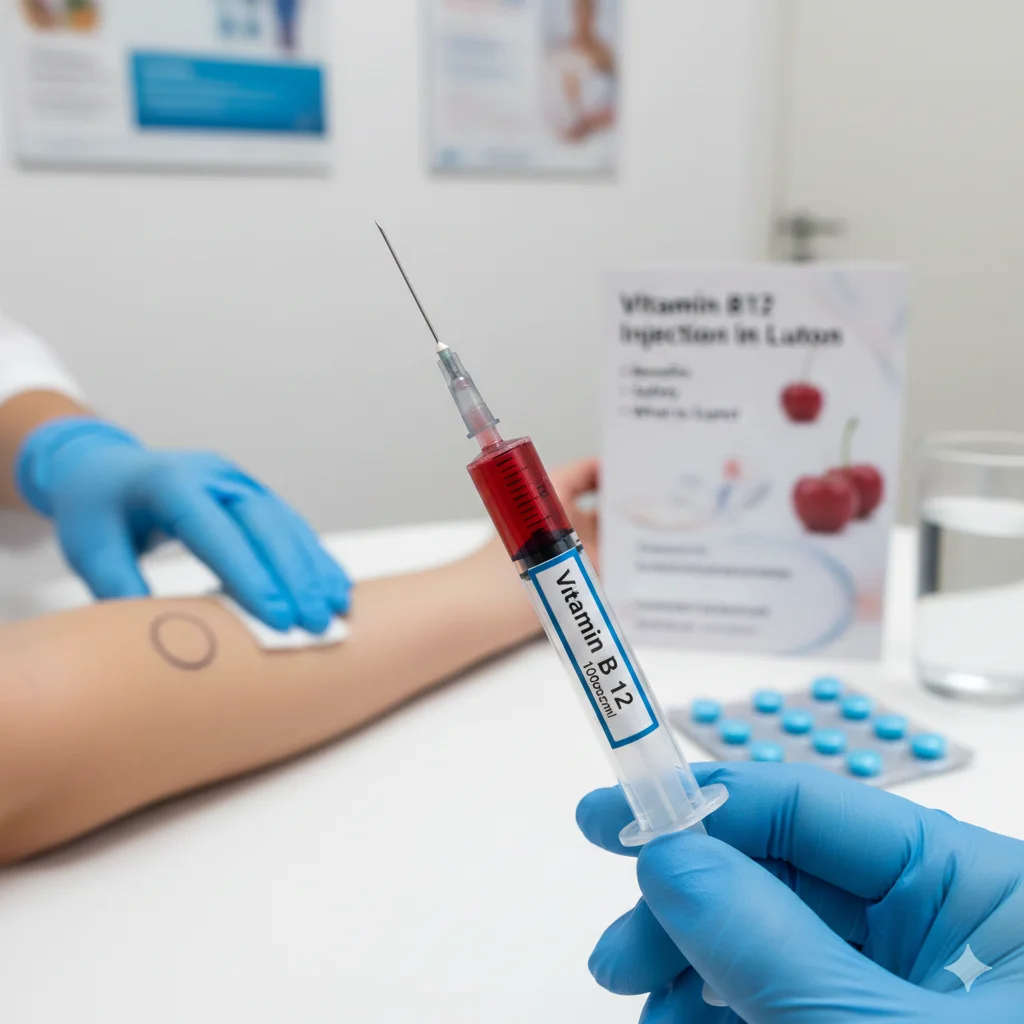
Biscot Pharmacy offers a vitamin b12 injection in luton service for adults who meet the pharmacy’s clinical criteria. Treatment is subject to pharmacist assessment and is not guaranteed from symptoms or PPI use alone.
Frequently Asked Questions
Can omeprazole affect vitamin B12 absorption?
Long-term proton pump inhibitor use, including omeprazole, is recognised by NICE as a risk factor for vitamin B12 deficiency. The risk varies between people and does not mean everyone taking omeprazole will become deficient.
Does taking a PPI mean I will become B12 deficient?
No. PPIs are a risk factor, not a guarantee of deficiency. Risk depends on factors such as treatment duration, dose, diet, age, other medical conditions and other causes of reduced B12 absorption.
Which symptoms should I discuss with a clinician?
Persistent tiredness, weakness, a sore tongue, pins and needles, numbness, balance problems, memory or concentration changes, or unexplained anaemia should be discussed with a clinician because they can have several possible causes.
Can a B12 blood test help?
Yes, when symptoms and risk factors make deficiency possible. NICE recommends total B12 or active B12 as the usual initial test for suspected deficiency, with further testing when results are unclear.
Should I change my acid-reducing medicine without advice?
No. Do not stop or change a PPI or H2-receptor antagonist without speaking to the clinician or pharmacist responsible for your treatment. If medicine-induced B12 deficiency is confirmed, the medicine itself may be reviewed if appropriate.
Important
This article provides general information and does not replace individual medical advice. Do not stop or change a prescribed acid-reducing medicine or vitamin B12 treatment plan without speaking to the clinician or pharmacist responsible for your care.



 the prescription app


