
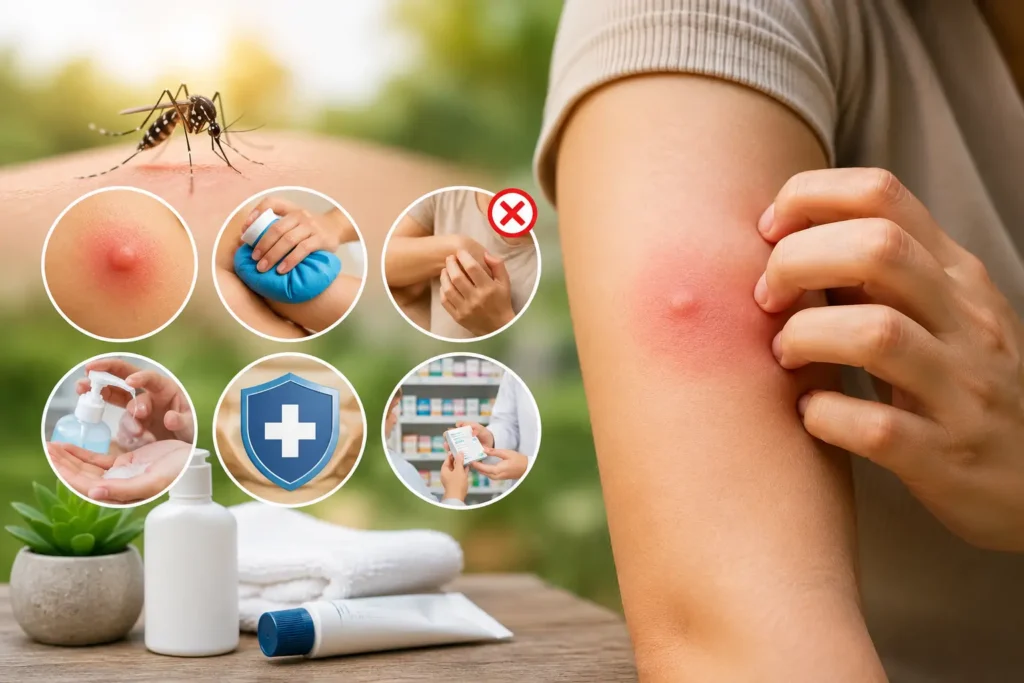
Mosquito bite swelling is usually part of the body’s normal response to the bite. A small raised lump, itching, redness and some swelling can develop soon after you are bitten and often settle over the following few days. Some people react more strongly than others, so a larger swollen area does not automatically mean the bite is infected.
What matters is how the swelling develops, what other symptoms appear and whether the area is improving or getting worse. NHS England’s current Pharmacy First pathway specifically notes that a rapid skin reaction after an insect bite is more likely to be inflammatory or allergic than an infection.
What Is Normal Mosquito Bite Swelling?
A typical mosquito bite may leave a small raised area that feels itchy, slightly sore or warm. The skin around it may also become red or swollen. These reactions happen because your immune system is responding to substances introduced during the bite.
For many people, the swelling is relatively small. Others can develop a much more noticeable local reaction. A larger area of swelling can still be caused by inflammation or an allergic response rather than bacteria entering the skin.
The NHS advises that insect bites and stings are generally not serious and usually improve within several days. NHS England’s Pharmacy First pathway also notes that redness and itching can sometimes last for up to around 10 days.
Can a Mosquito Bite Swell a Lot Without Being Infected?
Yes. Size alone cannot tell you whether mosquito bite swelling is infected.
A strong local reaction can develop fairly quickly after the bite. NHS England specifically distinguishes these rapid inflammatory or allergic reactions from infection. This is important because redness and swelling are both symptoms that can occur with either inflammation or infection.
A reaction that appears quickly, is mainly itchy and gradually starts settling is more consistent with inflammation or an allergic response than bacterial infection.
By contrast, infection becomes more concerning when the bite changes over time and develops a combination of increasing pain, tenderness, heat, spreading redness or worsening swelling.
Why the Timing of the Swelling Matters
One of the most useful clues is when the swelling appears.
Swelling that develops soon after a mosquito bite often represents the body’s inflammatory response. The Pharmacy First clinical pathway states that rapid-onset reactions are likely to be inflammatory or allergic rather than infected.
The NHS England pathway assesses possible infected insect bites differently once at least 48 hours have passed. At that point, the pharmacist looks for several features together rather than relying on swelling alone.
This means a large itchy bite shortly after you were bitten is not automatically a reason to expect antibiotics.
When Could Mosquito Bite Swelling Suggest Infection?
A mosquito bite can sometimes become infected, particularly if repeated scratching damages the skin and allows bacteria to enter.
Under the current NHS England Pharmacy First pathway, infection becomes more likely when several features occur together. These include redness, pain or tenderness, swelling and skin that feels hot around the bite. Spreading redness or swelling and pus or discharge are additional reasons for clinical assessment.
The key difference is therefore not simply how big the swelling is, but whether it is becoming increasingly painful, hot, spreading or accompanied by discharge.
If itching remains the main symptom and there are no other signs of infection, NHS England advises that infection is less likely.
Does Scratching Make a Mosquito Bite Worse?
Scratching can make mosquito bite swelling and redness worse even when the bite is not infected. It irritates already inflamed skin and can prolong the local reaction.
Repeated scratching can also break the skin. Once the skin barrier is damaged, bacteria have an easier route into the tissue and the risk of secondary infection increases.
This is why avoiding scratching is useful for both reducing inflammation and lowering infection risk. NHS guidance recommends keeping the area clean and avoiding scratching whenever possible.
What Can You Do for Normal Mosquito Bite Swelling?
For straightforward swelling without concerning symptoms, the NHS recommends simple self-care. Washing the area with soap and water can help reduce infection risk, while a cold compress or wrapped ice pack can help with swelling.
Keeping an affected arm or leg raised may also help. A pharmacist can advise whether an antihistamine, hydrocortisone cream or suitable pain relief may be appropriate for you, taking account of your age, other medicines, pregnancy and medical conditions.
Avoid squeezing the bite or using harsh home remedies that may further irritate the skin.
When Should a Pharmacist Check the Bite?
Consider asking a pharmacist to assess the bite if the area is increasingly swollen and is also becoming painful, hot or more red, or if fluid or pus is appearing.
NHS guidance specifically advises speaking to a pharmacist for an insect bite or sting in someone aged one year or over when the surrounding skin becomes hot, painful, swollen or appears increasingly red.
For eligible patients with signs of an infected insect bite, assessment may be available through the NHS Pharmacy First service at Biscot Pharmacy in Luton.
The Pharmacy First pathway applies to infected insect bites in adults and children aged one year and over, subject to its clinical criteria and exclusions. A pharmacist may recommend self-care, treatment or referral depending on what they find. Antibiotics are not recommended simply because a bite is swollen.
When Is Swelling Urgent?
Mosquito bite swelling needs a different level of attention if it forms part of a serious allergic reaction.
Call 999 if there is sudden swelling of the lips, mouth, tongue or throat, severe difficulty breathing or swallowing, fainting, marked confusion or other features suggesting anaphylaxis.
Seek urgent advice from NHS 111 or an appropriate urgent healthcare service if symptoms are getting significantly worse, the bite or sting is close to the eyes, there is a high temperature with swollen glands, you feel dizzy or unwell, or a large reaction is causing concern.
Severe pain that seems out of proportion to the appearance of the bite, significant pus or fluid collection, or systemic illness also falls outside straightforward self-care and may require onward referral.
What About Mosquito Bites After Travelling Abroad?
A mosquito bite acquired outside the UK needs extra context.
The Pharmacy First infected-insect-bite pathway specifically directs pharmacists to consider onward referral when a bite or sting occurred abroad and there is concern about an insect-borne illness.
If you develop fever or feel significantly unwell after returning from a country where mosquito-borne infections occur, tell the healthcare professional where you travelled and when you returned. Do not assume that swelling around one bite explains a fever or systemic illness.
Mosquito Bite Swelling vs Infection: The Practical Difference
The easiest way to think about mosquito bite swelling is to look at the whole pattern.
Swelling that develops quickly, remains mainly itchy and gradually settles is more consistent with a normal inflammatory or allergic response. Larger reactions can still fall into this category.
A bite deserves closer assessment when symptoms are worsening rather than settling, particularly after the first couple of days, and when swelling occurs alongside increasing pain, heat, tenderness, spreading redness or discharge.
That distinction matters because antibiotics do not treat an ordinary allergic or inflammatory mosquito-bite reaction. The NHS Pharmacy First pathway specifically advises against offering antibiotics where there are no signs or symptoms of infection.
Conclusion
Mosquito bite swelling can sometimes look dramatic without being dangerous. A large local reaction does not automatically mean the bite is infected, particularly when the swelling develops quickly and itching is the main symptom.
Pay more attention to the direction the symptoms are moving. Increasing pain, heat, spreading redness, discharge or worsening swelling after the first couple of days makes professional assessment more important.
If you are in Luton and concerned that an insect bite may have become infected, Biscot Pharmacy can assess eligible patients through its Pharmacy First service. The consultation determines whether self-care, pharmacy treatment or another healthcare service is the appropriate next step.
Written by the Biscot Pharmacy Editorial Team.
Medically reviewed by Faisal Shafiq, Superintendent Pharmacist (GPhC 2067224).
Frequently Asked Questions
Is a very swollen mosquito bite always infected?
No. A larger local reaction can be caused by inflammation or an allergic response. Infection is more concerning when swelling occurs alongside increasing pain, heat, spreading redness, tenderness or discharge.
How long can mosquito bite swelling last?
Most insect bites improve within several days, although redness and itching can sometimes persist for longer. NHS England notes that redness and itching after an insect bite may last up to around 10 days.
Is itching or pain more suggestive of infection?
Itching is very common with a normal bite reaction. When itch is the main symptom without other signs of infection, an infected bite is less likely. Increasing pain or tenderness together with heat, redness and swelling deserves more attention.
Can a pharmacist treat an infected mosquito bite?
A pharmacist can assess eligible infected insect bites through Pharmacy First. Treatment depends on the clinical findings and pathway criteria; not every swollen mosquito bite needs antibiotics.
Can children use Pharmacy First for infected insect bites?
The NHS England infected-insect-bite pathway covers adults and children aged one year and over, with clinical exclusions applying. Children under one require a different healthcare route.
When should I call 999 after an insect bite?
Call 999 for symptoms suggesting a severe allergic reaction, such as sudden swelling of the mouth, tongue or throat, serious breathing difficulty, collapse or loss of responsiveness.
Disclaimer
This article provides general health information and cannot determine whether an individual mosquito bite is normal, allergic or infected. Reactions vary between people, and examination may be needed where symptoms are persistent, spreading or worsening. Pharmacy First eligibility and treatment depend on clinical assessment. Seek urgent or emergency care when symptoms warrant it.


 the prescription app


