
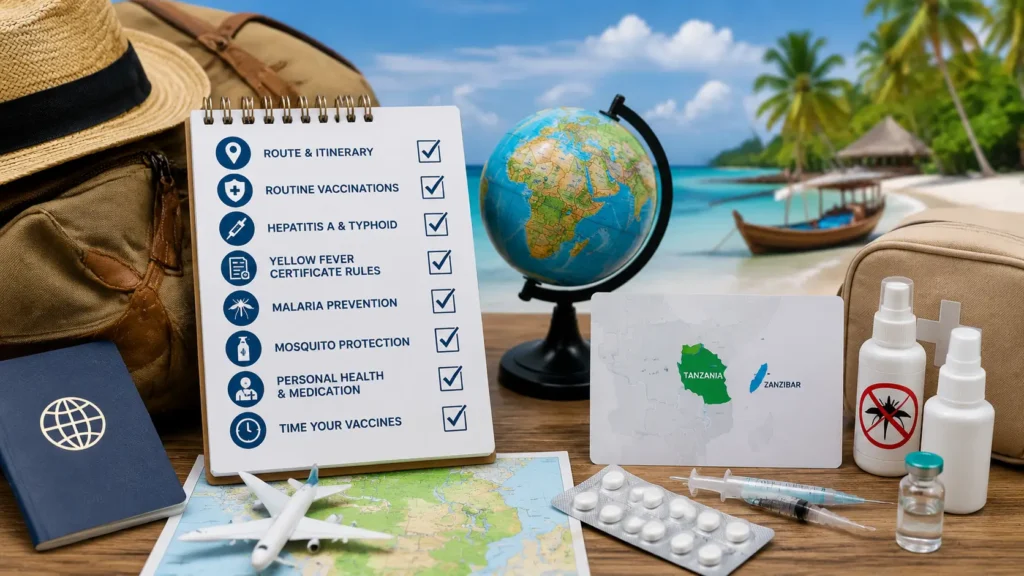
If you are travelling from Luton to Tanzania or Zanzibar, the most useful preparation is not to choose vaccines from a generic list. Your travel-health advice should be based on your exact route, stopovers, length of stay, accommodation, planned activities, health history and previous vaccinations. Tanzania includes very different itineraries: a Zanzibar beach stay, a mainland safari, visiting friends or relatives, volunteering, or climbing Kilimanjaro can create different vaccine, malaria and certificate considerations. Bring the details to your appointment so the pharmacist can assess the whole journey rather than the country name alone.
Why This Is a Luton Checklist, Not Another Broad Tanzania Guide
This page is a Luton pre-appointment checklist rather than a complete national destination guide. TravelJabs4U already has a detailed Tanzania destination page covering the broader travel-vaccine topic. Here, the focus is what a Biscot Pharmacy patient should check and bring before a local consultation, and which Tanzania- or Zanzibar-specific details are most likely to change the assessment.
When Should You Start Checking Tanzania and Zanzibar Travel Vaccines?
Start checking your health requirements early. FCDO advises travellers to check the latest Tanzania vaccine recommendations at least eight weeks before the trip, while TravelHealthPro advises arranging a health-professional appointment ideally four to six weeks before travel. These messages are compatible: start researching early and book the consultation with enough time for any multi-dose course or follow-up. If departure is closer, advice can still be worthwhile, so do not assume it is too late.
1. Write Down Your Full Tanzania and Zanzibar Route
Write down every place you expect to visit, not only “Tanzania” or “Zanzibar”. Include mainland cities, safari parks, rural stays, islands, Kilimanjaro or other high-altitude plans, family homes, work or volunteering locations, and every country used for a stopover. Route detail matters for malaria, yellow fever certificate rules, access to medical care and the likelihood of animal, food, water or mosquito exposure.
2. Check Your Routine UK Vaccination Record
TravelHealthPro advises all travellers to Tanzania to be up to date with routine UK vaccination courses and boosters according to age, medical history and individual risk. The pre-travel appointment is a useful time to check records for vaccines such as MMR and diphtheria-tetanus-polio. If you do not have a clear record, bring whatever documentation you can find rather than guessing when your last dose was.
3. Vaccines Most Travellers Are Likely to Discuss
For Tanzania, TravelHealthPro recommends hepatitis A vaccination for all previously unvaccinated travellers. It also recommends typhoid vaccination for most travellers, particularly people visiting friends and relatives, young children, frequent or long-stay travellers, and those staying where sanitation or food hygiene may be poor. Tetanus protection should also be up to date, with destination access to medical care influencing whether a booster is advised. These recommendations still need to be interpreted alongside your previous vaccine history and personal health.
4. Extra Vaccines Depend on the Traveller and Itinerary
Other vaccines are more selective. Hepatitis B can be considered for all travellers and is particularly relevant where there may be blood or body-fluid exposure, medical or dental care, long stays or family visits. Rabies pre-exposure vaccination is recommended for travellers with higher animal exposure, long stays of more than one month or limited access to prompt post-exposure care. Meningococcal ACWY, cholera, polio-related boosters, tuberculosis vaccination and newer mosquito-borne-disease vaccines may be relevant only for particular travellers, routes, activities or medical circumstances. A pharmacist should assess these rather than presenting them as routine for everyone.
5. Check Yellow Fever Certificate Rules from Your Flight Route
Yellow fever causes two separate questions: disease risk and certificate rules. TravelHealthPro describes a low potential for yellow fever exposure throughout Tanzania and says vaccination is generally not recommended for ordinary travel, although it can be considered for a small subset of travellers with prolonged or heavy mosquito exposure when clinically appropriate. Separately, Tanzania requires a yellow fever certificate from travellers over one year of age who arrive from a country with yellow fever transmission risk, including people who have transited for more than 12 hours through an airport in a risk country. Bring your full flight route because a stopover can therefore matter even when you are flying from the UK.
6. Malaria Advice Is Important for Mainland Tanzania and Zanzibar
Malaria is a major itinerary check. The 2026 UKHSA malaria recommendations state that there is a high risk of malaria in all areas of Tanzania below 1,800 metres and that there is also a risk in Zanzibar. For these risk areas, atovaquone-proguanil, doxycycline or mefloquine are listed as options, but the suitable medicine depends on age, weight, pregnancy, medical history, other medicines and the route. Areas above 1,800 metres are classed as no malaria risk, but a Kilimanjaro trip still commonly includes lower-altitude travel before and after the climb. Do not select or dose antimalarials from this article; this needs an individual assessment.
7. Plan Mosquito Bite Protection as Well as Vaccination
Mosquito precautions remain important whether or not tablets are prescribed. TravelHealthPro identifies dengue and chikungunya risk in Tanzania, and its current Tanzania page also carries outbreak information that can change. Use suitable repellent, cover exposed skin when practical and use screened or air-conditioned accommodation or an appropriate mosquito net where needed. Malaria-carrying mosquitoes tend to bite from dusk to dawn, while some other mosquito-borne infections are spread by mosquitoes that bite during the day.
8. Zanzibar Has a Separate Mandatory Inbound Insurance Rule
If your trip includes Zanzibar, add the current island entry requirement to your checklist. FCDO states that all visitors to Zanzibar, other than residents, must have mandatory inbound travel insurance from the Zanzibar Insurance Corporation for the duration of the stay, up to 92 days. Other international travel-insurance policies are not accepted for this particular entry requirement. That does not replace the need for suitable broader travel insurance covering your own medical conditions, activities, treatment and possible evacuation.
9. Recheck Outbreaks and Entry Screening Close to Departure
Recheck official guidance shortly before departure. The current TravelHealthPro Tanzania page notes an ongoing mpox clade I outbreak, and FCDO describes entry health screening that can change in response to regional outbreaks. FCDO also advises against all but essential travel to parts of Tanzania. These are time-sensitive issues, so the travel advice you read when booking a holiday may not be the advice in force when you fly.
10. Bring Your Medicines and Health Information
Bring a list of regular prescription medicines, over-the-counter medicines and important allergies. FCDO warns that the legal status and regulation of medicines can differ between the UK and other countries. If you have a long-term condition, are pregnant, are immunosuppressed or have had a serious vaccine reaction, mention this when booking and during the consultation because it can affect vaccine or malaria-prevention choices.
What to Bring to Your Luton Travel-Health Appointment
For a Tanzania or Zanzibar appointment, bring or be ready to provide: travel dates; every destination and stopover; accommodation type; safari, trekking, diving, volunteering or healthcare-work plans; previous vaccine records; medical conditions; pregnancy or breastfeeding information where relevant; regular medicines and allergies; and details of previous vaccine reactions. If you are travelling as a family, bring each traveller’s information separately because recommendations can differ by age and health.
For the Full Tanzania Destination Guide
For the broader destination-level vaccine discussion, use the full Tanzania travel vaccination guide. TravelJabs4U is the stronger broad travel-health owner for this destination and covers the national Tanzania and Zanzibar education in more depth. This Biscot article deliberately stays focused on the local pre-appointment checklist so the two sites do not compete for the same role.
Local Travel Vaccination Support in Luton
When you are ready for a local assessment, Biscot Pharmacy’s travel vaccination service in Luton. The pharmacist can review your itinerary, vaccine history, health conditions and malaria risk before advising what is appropriate. The service page remains the main Biscot destination for current clinic information and booking. A consultation does not guarantee that a particular vaccine or antimalarial medicine will be suitable, available or supplied.
Conclusion
The key to Tanzania and Zanzibar travel vaccines is the itinerary. Before your Luton appointment, check your routine vaccine record, note every destination and stopover, identify safari, rural, family-visit or high-altitude plans, and bring your medicines and medical history. Most travellers need to discuss hepatitis A and typhoid alongside routine protection; some need additional vaccines because of longer stays, animal exposure or other risks. Yellow fever certificate rules depend on the route, and malaria prevention is relevant below 1,800 metres including Zanzibar. Recheck TravelHealthPro and FCDO close to departure because outbreaks, entry screening and travel advice can change.
Written by the Biscot Pharmacy Editorial Team.
Medically reviewed by Faisal Shafiq, Superintendent Pharmacist (GPhC 2067224).
Frequently Asked Questions
Do mainland Tanzania and Zanzibar need exactly the same vaccines?
Not necessarily. The same country guidance covers Tanzania including Zanzibar, but recommendations depend on your exact route, length of stay, activities, previous vaccinations and health. Malaria risk also needs to be considered for Zanzibar.
Are malaria tablets recommended for Zanzibar?
Current 2026 UKHSA guidance states that there is a risk of malaria in Zanzibar and lists atovaquone-proguanil, doxycycline or mefloquine as options for risk areas. The appropriate option requires an individual assessment.
Do I need a yellow fever vaccine for Tanzania or Zanzibar?
TravelHealthPro says yellow fever vaccination is generally not recommended for ordinary travel to Tanzania because exposure potential is low, although it may be considered for a small subset of travellers. A certificate can still be required because of the country you arrive from or a long transit through a yellow-fever-risk country.
How early should I arrange a travel-health appointment?
Start checking requirements around eight weeks before travel where possible. TravelHealthPro advises an appointment ideally four to six weeks before departure, but a later appointment can still be useful.
Does climbing Kilimanjaro change malaria advice?
UKHSA classifies areas above 1,800 metres as no malaria risk, but Kilimanjaro itineraries usually include time below that altitude where Tanzania is high risk. Bring the full route rather than using the summit altitude alone.
What is different about entering Zanzibar?
FCDO states that non-resident visitors to Zanzibar need mandatory inbound travel insurance from the Zanzibar Insurance Corporation for stays of up to 92 days. Check the current official rules before travel.
What should I bring to my Tanzania travel-vaccine appointment?
Bring your travel dates, full itinerary and stopovers, vaccine records, medical history, regular medicines, allergies and details of planned activities such as safari, trekking, volunteering or family visits.
Disclaimer
This article provides general UK travel-health information and is not a personal vaccine or malaria prescription. Advice for Tanzania and Zanzibar can change and depends on your route, age, medical history, pregnancy, medicines, previous vaccination, length of stay and planned activities. Check current TravelHealthPro and FCDO guidance before travel. A pharmacy consultation does not guarantee any particular vaccine, antimalarial medicine, certificate or supply.


 the prescription app


