

A sore or red tongue and mouth ulcers can occur with vitamin B12 deficiency, but they are not specific to it. NHS guidance lists these mouth symptoms among the possible features of vitamin B12 or folate deficiency, while also recognising that mouth ulcers have many other common causes.
If mouth symptoms keep returning, last longer than expected or occur alongside tiredness, weakness, pins and needles, numbness, balance problems or other possible B12 symptoms, it may be worth discussing them with a GP, dentist or pharmacist.
Why vitamin B12 can affect the mouth
Vitamin B12 is involved in normal cell production and the formation of healthy blood cells. When deficiency develops, tissues with rapid cell turnover can be affected, including the lining of the mouth and tongue.
This can contribute to a sore or red tongue and, in some people, mouth ulcers. These symptoms can happen with or without obvious anaemia.
A sore tongue does not automatically mean B12 deficiency
Glossitis – an inflamed, sore or unusually red tongue – has several possible causes. Vitamin B12 deficiency is one of them, but iron or folate deficiency, infection, irritation, dry mouth, medication effects and other conditions can produce similar symptoms.
For the wider symptom picture, see our guide to vitamin B12 deficiency symptoms.
Mouth ulcers have many possible causes
Most mouth ulcers are minor and heal within 1 to 2 weeks. They can be triggered by biting the cheek, sharp teeth or fillings, braces, hot or rough food, stress, some medicines or nutritional deficiencies.
Recurring or persistent ulcers can also occur with conditions such as coeliac disease, inflammatory bowel disease or immune-related conditions. That is why repeated mouth ulcers should not be assumed to be a B12 problem.
When persistent mouth problems need assessment
NHS guidance recommends seeing a GP or dentist if a mouth ulcer lasts longer than 3 weeks, is different from your usual ulcers, becomes more painful or red, bleeds, or occurs with other concerning symptoms.
You should also seek assessment if mouth symptoms are frequent, unexplained or accompanied by weight loss, difficulty swallowing, persistent neck lumps or other symptoms that need investigation.
What B12 testing may involve
If your wider history and symptoms suggest possible vitamin B12 deficiency, a clinician may consider blood testing. NICE identifies total B12 or active B12 as the usual initial tests for most adults.
The result is interpreted alongside symptoms, risk factors and other findings. Mouth symptoms alone are not enough to confirm deficiency.
For a fuller explanation, read blood test before a B12 injection.
Would a B12 injection help a sore tongue or mouth ulcers?
Possibly, but only when vitamin B12 deficiency is actually contributing to the symptoms and injection treatment is appropriate for the cause and clinical situation.
If mouth symptoms are caused by something else, a B12 injection may not help. That is why diagnosis and treatment planning matter more than treating the symptom in isolation.
If replacement is needed, the route is individual. See B12 injections vs tablets for a general comparison.
Simple self-care while you arrange assessment
- use a soft-bristled toothbrush;
- avoid very spicy, salty, acidic or rough foods if they worsen the area;
- choose cooler drinks and softer foods if the mouth is sore;
- avoid repeatedly touching or biting the affected area;
- keep up regular dental care.
These measures can make the mouth more comfortable, but they do not replace assessment when ulcers are persistent, unusual or associated with other symptoms.
B12 mouth symptoms and local support in Luton
If you are in Luton and have mouth symptoms alongside a confirmed low B12 result, previous diagnosis or an established treatment plan, a pharmacist can help you understand whether pharmacy support is appropriate.
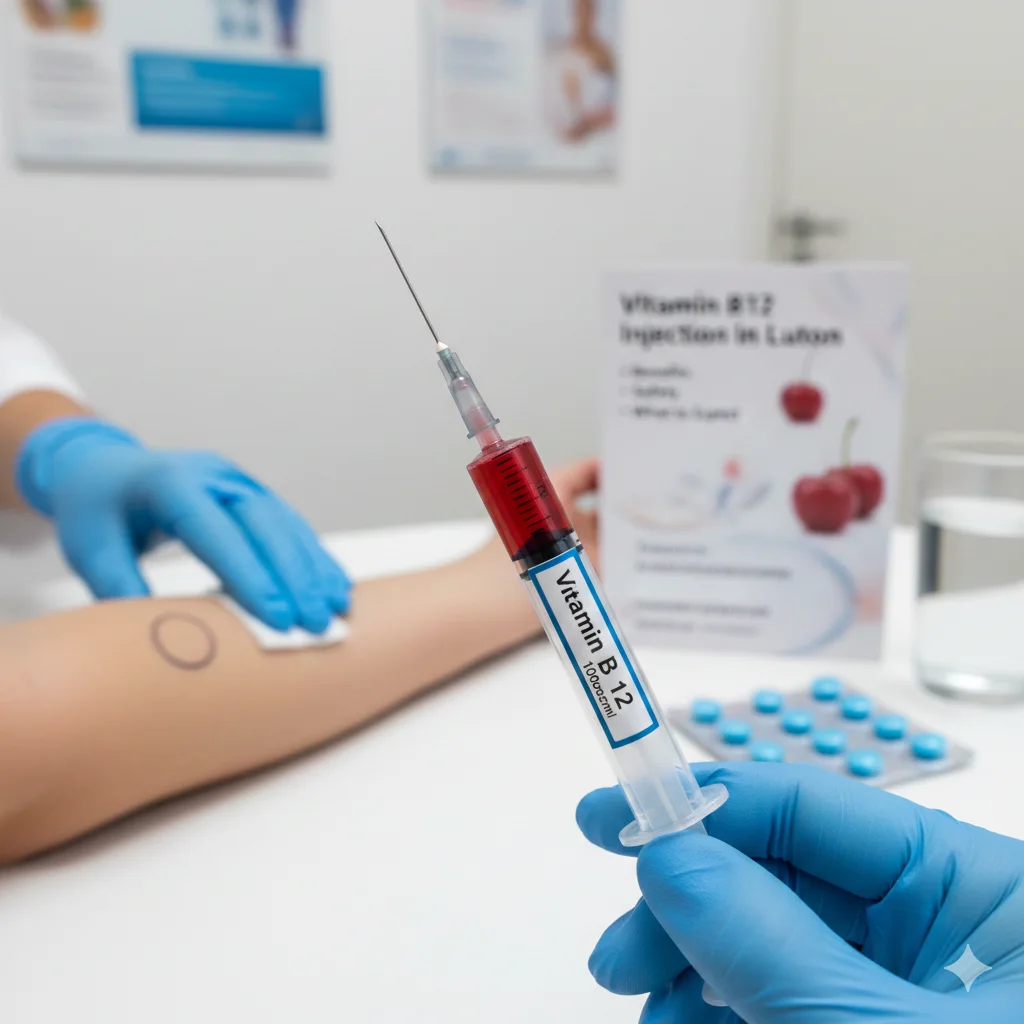
Biscot Pharmacy offers a vitamin b12 injection in luton service for adults who meet the pharmacy’s clinical criteria. A sore tongue or mouth ulcers alone do not mean an injection is needed, and blood testing, dental review or GP assessment may be more appropriate.
Frequently Asked Questions
Can B12 deficiency cause a sore tongue?
Yes. NHS guidance lists a sore or red tongue as a possible symptom of vitamin B12 or folate deficiency. It can also happen for many other reasons, so the symptom alone does not confirm B12 deficiency.
Are recurring mouth ulcers always related to B12?
No. Mouth ulcers are common and can be caused by local irritation, stress, medicines, dental problems, other vitamin or mineral deficiencies and several medical conditions. Vitamin B12 deficiency is only one possible explanation.
What other deficiencies may affect the mouth?
Iron, folate, zinc and other nutritional deficiencies can be associated with mouth symptoms. The right tests depend on the wider history and clinical assessment rather than one symptom alone.
When should I have persistent ulcers checked?
See a GP or dentist if a mouth ulcer lasts longer than 3 weeks, is unusual for you, becomes more painful or red, bleeds, or is accompanied by other concerning symptoms.
Would a B12 injection help mouth symptoms?
Only if vitamin B12 deficiency is genuinely part of the cause and injection treatment is appropriate for you. Mouth symptoms should not be used as a reason to have a B12 injection without assessment.
Important
This article provides general information and does not diagnose vitamin B12 deficiency or the cause of mouth ulcers. Persistent, unusual or worsening mouth symptoms should be assessed by an appropriate healthcare professional or dentist.



 the prescription app


