
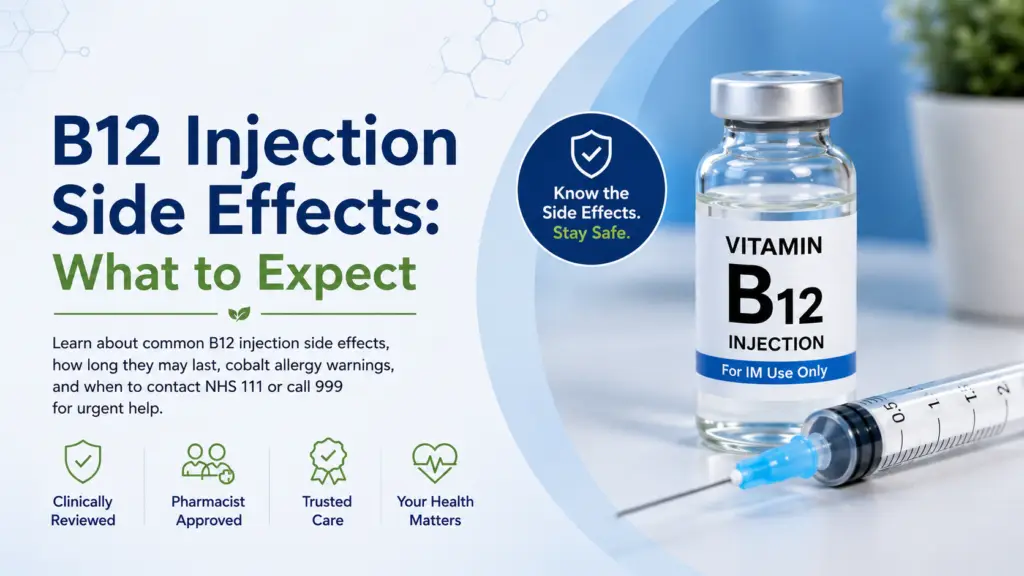
Most B12 injection side effects are mild and temporary. With hydroxocobalamin, the vitamin B12 injection commonly used in the UK, possible effects include pain, swelling or itching where the injection was given, nausea or vomiting, diarrhoea, headache, dizziness and hot flushes. Serious reactions are rare, but breathing difficulty, swelling of the mouth or throat, fainting, or a severe or blistering rash need urgent help.
How you feel after an injection also depends on why you needed treatment. Ongoing tiredness, pins and needles or concentration problems may be caused by the underlying deficiency rather than the injection itself. NICE advises that symptoms may start to improve within two weeks, but improvement can take up to three months, and some symptoms can initially feel worse.
Common B12 injection side effects
Hydroxocobalamin is a medicine, so it can cause side effects even though many people have no problems. The NHS lists the following common effects:
· Pain, swelling or itchy skin at the injection site. These reactions are usually mild and may last only a few hours.
· Feeling or being sick. Simple meals and small, frequent sips of water may help if you feel nauseous.
· Diarrhoea. Drink enough fluid to reduce the risk of dehydration.
· Headache. Rest and fluids may help; ask a pharmacist about a suitable painkiller if needed.
· Dizziness. Sit or lie down until it passes, and do not drive or use machinery while dizzy.
· Hot flushes. These may settle over a few days.
The patient information leaflet for hydroxocobalamin also lists effects whose frequency cannot be estimated from available data, including feeling generally unwell, rash, itching, fever, chills, pins and needles, tremor and unusual urine colour. The exact advice for you depends on the product used, your medical history and any other symptoms.
How long do B12 injection side effects last?
There is no single duration for every side effect. Injection-site soreness, swelling or itching is often short-lived and may settle within a few hours. Hot flushes may take a few days to resolve. Headache, nausea, diarrhoea or dizziness should be monitored and usually deserve advice if they are severe, continue, or interfere with normal activities.
Do not confuse the duration of a side effect with the time needed for deficiency symptoms to improve. See how long B12 injections can take to work for a separate explanation of treatment response. NICE states that improvement may begin within two weeks but can take up to three months, while some neurological symptoms may take longer.
Can a B12 injection make you feel tired or worse at first?
Tiredness is not listed by the NHS as one of the common hydroxocobalamin side effects. However, the product leaflet includes malaise, meaning a general feeling of being unwell, and some people may experience headache, dizziness or nausea that makes them feel below par for a short time.
More importantly, the symptoms that led to treatment may not improve immediately. Fatigue, weakness, brain fog, numbness or balance problems can take time to recover, and NICE notes that symptoms can initially worsen during treatment before improving. Feeling worse should not automatically be dismissed as a normal reaction, especially when symptoms are new, severe or progressive.
Contact a pharmacist, GP or NHS 111 if you are concerned, if symptoms do not settle, or if you develop new symptoms after treatment. Ongoing tiredness can have many causes, so further assessment may be more appropriate than arranging another injection.
Cobalt allergy and delayed skin reactions
Vitamin B12 contains cobalt. The MHRA advises that people with a known cobalt allergy should tell the prescriber or healthcare professional before receiving hydroxocobalamin or cyanocobalamin. Sensitivity reactions are usually skin-related, such as an itchy rash, hives or dermatitis.
A cobalt sensitivity reaction may begin immediately or be delayed for up to 72 hours after a dose. Call NHS 111 or speak to a doctor if you develop an allergic skin reaction. Seek urgent medical care for a widespread or blistering rash, wheezing, breathing difficulty, swelling, or feeling faint.
Rare but serious reactions: when to get urgent help
Serious side effects are very rare, but knowing the warning signs matters.
· Call 999 now for swelling of the lips, mouth, tongue or throat; difficulty breathing or swallowing; blue, grey or very pale skin; sudden severe confusion or dizziness; collapse; or a person who cannot be woken.
· Call NHS 111 or contact a doctor promptly if you develop palpitations or an irregular heartbeat after treatment.
· Seek advice for a rash or hives, particularly if you have a known cobalt allergy, because reactions may be delayed.
· Ask for medical advice if a side effect is severe, lasts longer than expected, keeps returning or is accompanied by new neurological symptoms.
The hydroxocobalamin leaflet also describes very rare serious allergic reactions and irregular heartbeat linked to low potassium during the early stages of treatment. This does not mean everyone needs routine potassium testing, but a clinician should assess unexpected palpitations, marked weakness or other concerning symptoms.
What to do after a B12 injection
1. Follow the aftercare advice provided by the pharmacist, nurse or clinician who administered the injection.
2. Keep the injection area clean and avoid rubbing it if it is sore or itchy.
3. Rest and drink fluids if you have a headache, nausea, diarrhoea or mild dizziness.
4. Do not drive, cycle or use machinery until dizziness has fully passed.
5. Do not arrange extra or more frequent injections to try to speed up recovery unless a clinician has advised this.
6. Record when symptoms started, how long they lasted and whether they are improving; this can help a healthcare professional assess the reaction.
7. Use the MHRA Yellow Card scheme to report a suspected medicine side effect when appropriate.
Before your next injection
Tell the healthcare professional about previous B12 injections, side effects, cobalt allergy, other allergies, pregnancy or breastfeeding, heart-rhythm problems, relevant medical conditions, and all medicines, vitamins, herbal products and supplements you use. Bring any recent blood results, diagnosis or treatment plan when available.
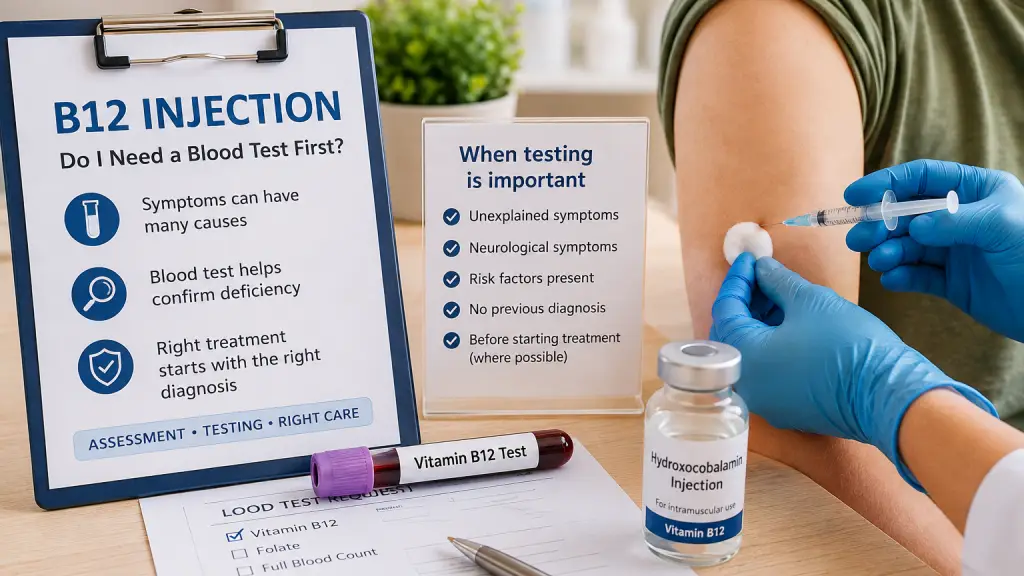
If deficiency has not been confirmed, the cause of symptoms is unclear, or neurological symptoms are present, assessment may be needed before further treatment. Read whether a blood test may be needed before a B12 injection and compare B12 injections with tablets for related decision support.
B12 injection assessment at Biscot Pharmacy in Luton
Biscot Pharmacy offers a private vitamin B12 injection service in Luton. Appointments currently start from £25 and are subject to a pharmacist suitability assessment. The published service includes a private consultation, review of relevant symptoms, history, medicines and supplements, administration when clinically appropriate, and aftercare advice. The appointment does not guarantee that an injection will be given.
The pharmacist may recommend a blood test, GP assessment or another route when symptoms have not been investigated, when an injection is not suitable, or when urgent or ongoing medical care is needed. Every appointment starts with an assessment, and further injections are not automatically required.
Review the current service information before travelling, or book an appointment. Biscot Pharmacy is at 157A Biscot Road, Luton, Bedfordshire, LU3 1AW. Current opening times and availability should be checked before your visit.
Conclusion
B12 injection side effects are usually mild and temporary, but they are not identical for everyone. Injection-site discomfort may last a few hours, while flushing or other mild effects may take longer. Tiredness after treatment may reflect the original deficiency, a temporary feeling of being unwell, or another cause that needs assessment.
Tell the healthcare professional about cobalt allergy and previous reactions, monitor symptoms, and seek help when a reaction is severe, persistent or unexpected. Call 999 for signs of anaphylaxis, and use NHS 111 or a doctor for concerning reactions that are not immediately life-threatening.
Written by the Biscot Pharmacy Editorial Team.
Frequently asked questions
What are the most common B12 injection side effects?
Common hydroxocobalamin side effects include pain, swelling or itching at the injection site, nausea or vomiting, diarrhoea, headache, dizziness and hot flushes. Not everyone gets side effects.
How long do B12 injection side effects last?
Injection-site reactions are usually mild and may last a few hours. Hot flushes may take a few days. Ask a pharmacist or doctor for advice if an effect is severe, persistent or not improving.
Is tiredness a side effect of a B12 injection?
Tiredness is not listed by the NHS as a common hydroxocobalamin side effect, although the product leaflet lists a general feeling of being unwell. Ongoing fatigue may be related to the deficiency or another cause and may need assessment.
Can B12 injection symptoms feel worse before they improve?
NICE advises that deficiency symptoms can initially worsen during treatment before improving. This should not be used to dismiss severe, new or progressive symptoms; seek medical advice when concerned.
What does cobalt allergy mean for B12 injections?
Hydroxocobalamin and cyanocobalamin contain cobalt. People with a known cobalt allergy should tell the healthcare professional before treatment and watch for skin reactions that may begin immediately or up to 72 hours later.
When should I call 999 after a B12 injection?
Call 999 for swelling of the lips, mouth, tongue or throat, difficulty breathing or swallowing, collapse, or other signs of a serious allergic reaction.
Can I book a B12 injection at Biscot Pharmacy?
Biscot Pharmacy offers private B12 injection appointments in Luton from £25, subject to pharmacist assessment. Booking does not guarantee treatment, and another route may be advised if the service is not suitable.
Clinical information sources
· NHS: Side effects of hydroxocobalamin
· NICE NG239: Vitamin B12 deficiency in over 16s
· MHRA: Vitamin B12 and cobalt allergy advice
· Electronic Medicines Compendium: Hydroxocobalamin injection patient leaflet
Disclaimer: This page provides general information and is not a diagnosis or a personal treatment plan. A pharmacist, GP or other appropriate clinician may need to assess your symptoms, medical history, test results and treatment needs. Service eligibility, price and availability can change. An appointment does not guarantee that an injection will be administered.



 the prescription app


