

Feeling tired all the time can be frustrating, but fatigue does not point to one diagnosis. Vitamin B12 deficiency can cause tiredness and weakness, yet the same symptoms can also occur with iron deficiency, thyroid problems, sleep disorders, infections, low mood, medication effects, chronic health conditions, poor sleep and many other causes. The safest starting point is to look at the whole picture rather than assume B12 is the reason.
Vitamin B12 is important for normal red blood cell formation and healthy nervous-system function. When deficiency is present, it can contribute to fatigue and other symptoms. But tiredness alone cannot confirm low B12, and an injection should not be treated as a general energy or wellbeing boost.
Why vitamin B12 deficiency can cause fatigue
Vitamin B12 is needed for normal blood-cell production and the healthy function of the brain and nerves. A deficiency can lead to abnormal red blood cells and anaemia, which may leave you feeling weak, breathless or tired. Neurological symptoms can also occur even when anaemia is not obvious, which is why symptoms and test results need to be considered together.
It is more accurate to say that treatment replaces a missing vitamin when deficiency exists than to say that B12 “creates energy”. If fatigue is caused by something else, taking extra B12 may not fix the problem. This distinction is especially important for people considering injections because a quick subjective change is not a reliable way to diagnose deficiency.
Fatigue has many possible causes
Persistent fatigue causes range from everyday problems, such as insufficient sleep or prolonged stress, to medical conditions that need assessment. Iron deficiency anaemia, thyroid disorders, diabetes, sleep apnoea, infections and some mental-health conditions can all cause tiredness. Medicines, alcohol use, changes in diet and other nutritional deficiencies can also contribute. Because the list is broad, ongoing or unexplained fatigue deserves a proper assessment rather than a single-vitamin assumption.
If tiredness is new, worsening, affecting daily life, or occurring with breathlessness, palpitations, weight loss, fever, significant weakness or other concerning symptoms, speak to a GP or another appropriate healthcare professional.
Signs of low B12 can extend beyond tiredness
NHS guidance lists a wide range of possible vitamin B12 or folate deficiency symptoms. Alongside tiredness or weakness, these can include headaches, shortness of breath, palpitations, a sore or red tongue, mouth ulcers, vision problems and changes in memory, understanding or judgement. Vitamin B12 deficiency can also affect the nervous system.
· Pins and needles, numbness or altered sensation.
· Muscle weakness.
· Balance or coordination problems.
· Changes in memory, thinking, mood or behaviour.
· Visual symptoms.
These signs are not unique to B12 deficiency. They matter because some neurological problems can become lasting if the underlying deficiency is not recognised and treated. Do not wait for an injection appointment if neurological symptoms are new, progressive or severe.
Who may be at higher risk of vitamin B12 deficiency?
Risk is higher when the body does not receive enough B12 or cannot absorb it properly. Possible risk factors include a vegan diet or another diet with limited B12 sources, autoimmune gastritis, some stomach or bowel conditions, previous gastrointestinal surgery and older age. Certain medicines can also affect B12 levels or absorption.
The MHRA advises that metformin can commonly reduce vitamin B12 levels, with greater risk at higher doses, with longer treatment and in people who already have risk factors. Proton pump inhibitors are another medicine group associated with reduced B12 absorption. If you take metformin and develop new or worsening extreme tiredness, pins and needles or other possible deficiency symptoms, discuss this with a healthcare professional rather than stopping metformin yourself.
Diet is only one part of the picture. Someone can eat B12-containing foods and still become deficient because of an absorption problem. Conversely, being vegan or vegetarian does not automatically mean an injection is needed; fortified foods and oral supplements can be appropriate depending on the situation.
When should you get a B12 blood test?
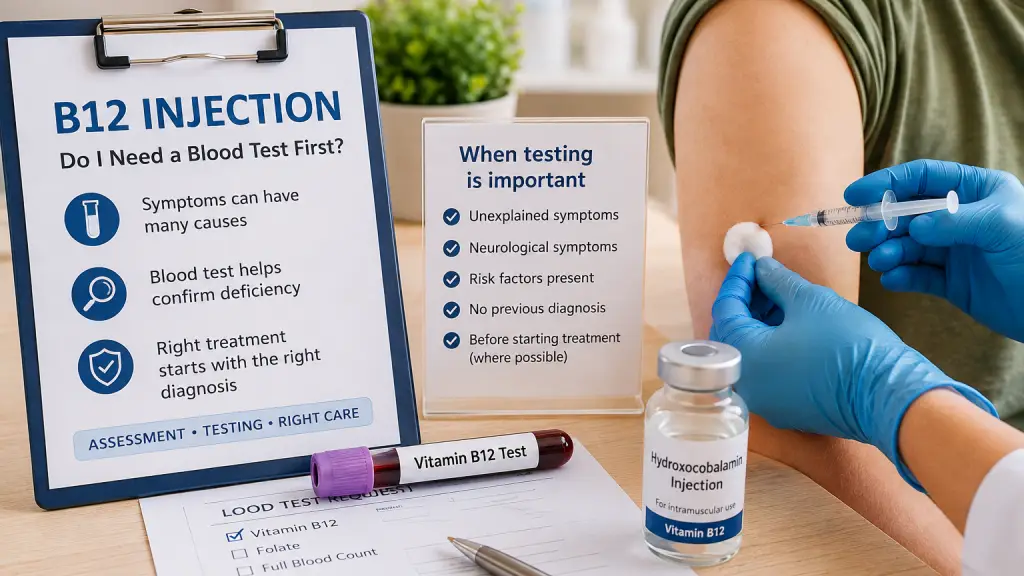
If B12 deficiency has not already been established, testing is often an important part of working out whether tiredness is related to B12 and what may be causing it. NHS guidance explains that diagnosis commonly uses symptoms together with blood tests. For a more detailed explanation of timing and what can affect interpretation, read when to get a B12 blood test.
Where the clinical situation allows, diagnostic blood samples are usually taken before vitamin B12 replacement is started because supplements or injections can alter measured levels and make later interpretation harder. There are important exceptions when a clinician considers treatment urgent, particularly where serious neurological or haematological features are suspected. That decision belongs with the responsible healthcare professional.
Do diet, tablets or injections help?
Treatment depends on why vitamin B12 is low. NHS guidance states that B12 deficiency can be treated with tablets or injections, and the ongoing plan depends on the underlying cause and whether there are neurological problems. Diet-related deficiency may sometimes be managed with dietary changes and oral B12, while non-diet-related deficiency or significant absorption problems may require intramuscular replacement.
If you are comparing treatment routes, it is useful to separate evidence-based replacement from general wellness claims. Our guide to B12 injection benefits and limitations explains what B12 replacement can reasonably do when deficiency is present and what it should not be expected to do.
Do not start, stop, switch or change a prescribed vitamin B12 treatment plan based on an article. The appropriate route, dose and frequency depend on the cause of deficiency, symptoms, test results and the clinician responsible for care. Tablets are not “ineffective” simply because injections bypass the digestive system, and injections are not automatically the better choice for every person.
How quickly should B12-related fatigue improve?
There is no single timetable that applies to everyone. If fatigue is genuinely related to vitamin B12 deficiency, improvement may occur as the deficiency is corrected, but the response depends on how low B12 was, how long symptoms have been present, the underlying cause and whether another condition is also contributing. Neurological symptoms can take longer to improve than some blood-related symptoms, and not every symptom will necessarily be caused by B12.
Avoid using an immediate “energy boost” as proof that the diagnosis was correct. If symptoms do not improve, get worse, return, or change despite treatment, the plan should be reviewed rather than simply increasing the frequency of injections.
When neurological symptoms need prompt medical advice
Seek prompt medical assessment if you develop new or worsening numbness, pins and needles, significant weakness, balance or walking problems, changes in vision, marked confusion, or other neurological symptoms. NHS guidance notes that neurological complications of B12 deficiency can sometimes become irreversible if left untreated. A clinician may need to assess you quickly and decide whether testing, treatment or specialist referral is required.
Call 999 for a medical emergency, such as severe breathing difficulty, collapse, sudden severe neurological symptoms or another immediately life-threatening situation. For urgent problems that are not life-threatening, NHS 111 can advise on the most appropriate service.
A sensible next step if you are always tired
Start by looking for patterns: how long the fatigue has lasted, whether sleep restores you, whether you have neurological or digestive symptoms, whether your diet has changed, and whether you take medicines that can affect B12. A GP or appropriate clinician can then decide which tests or assessments are useful. If B12 deficiency is confirmed, the treatment plan should match the cause rather than the symptom alone.
Private B12 service in Luton
If you have recent results or an established treatment plan, you can ask our pharmacist whether the private B12 injection in Luton service is suitable for you. A pharmacist suitability assessment is required, and booking does not guarantee that an injection will be administered. If the service is not appropriate, the pharmacist can explain the most suitable next step.
Conclusion
Vitamin B12 deficiency can be one cause of persistent tiredness, but it is not the only one and symptoms alone cannot confirm the diagnosis. The safest approach is to consider other possible causes, look for additional B12-related symptoms and risk factors, and use appropriate testing or clinical assessment when needed. Treatment may involve diet, tablets or injections depending on the cause; faster or more intensive treatment is not automatically better.
If you have neurological symptoms, rapidly worsening problems or other red flags, seek medical advice promptly rather than waiting for a routine private appointment. If you already have results or a treatment plan, a pharmacist can help you understand whether a local B12 service fits that plan.
Written by the Biscot Pharmacy Editorial Team.
Medically reviewed by Faisal Shafiq, Superintendent Pharmacist (GPhC 2067224).
Frequently asked questions
Can vitamin B12 deficiency make you feel tired all the time?
Yes, vitamin B12 deficiency can cause tiredness, weakness and lack of energy. But persistent fatigue has many possible causes, so tiredness alone does not confirm B12 deficiency. A healthcare professional may recommend assessment and blood tests.
Does tiredness mean I need a B12 injection?
No. An injection is not automatically needed because you feel tired. The correct next step depends on symptoms, risk factors, test results and the cause of any deficiency. Diet or oral B12 may be appropriate for some people, while others need intramuscular treatment.
What are signs of low B12 besides fatigue?
Possible signs include pins and needles, numbness, muscle weakness, balance problems, a sore or red tongue, mouth ulcers, vision changes and changes in memory or thinking. These symptoms can have other causes and should be assessed in context.
When should I get a B12 blood test?
Testing is often useful when deficiency has not already been diagnosed, symptoms are unexplained, or the cause and treatment plan are unclear. Blood samples are usually taken before starting replacement when the clinical situation allows because treatment can affect test interpretation.
Are B12 tablets or injections better?
Neither route is universally better. The right option depends on the cause of deficiency, absorption, symptoms, test results and the clinical plan. Some diet-related deficiency can be treated orally, while some malabsorption or neurological situations require intramuscular replacement.
When should I seek medical help for possible B12 deficiency?
Seek medical advice if symptoms are persistent, worsening or unexplained. Prompt assessment is particularly important for new or progressive numbness, pins and needles, weakness, balance or walking problems, visual changes or significant cognitive symptoms. Call 999 for a medical emergency.
Disclaimer
This page provides general information and is not a diagnosis or personal medical advice. Fatigue and neurological symptoms can have many causes, and testing, GP assessment or urgent care may be required. Do not start, stop, switch or change prescribed vitamin B12 treatment without advice from the responsible healthcare professional. A pharmacy consultation does not guarantee an injection, and service eligibility, price and availability can change.




 the prescription app


