

A small bruise can sometimes appear after a B12 injection because the needle can damage tiny blood vessels under the skin. If the mark is small, stays around the injection site and is gradually improving, it is usually reasonable to monitor it. Ask for medical advice sooner if the bruise is rapidly enlarging, very painful, associated with marked swelling or ongoing bleeding, or if you feel unwell.
Bruising is not the same as every other injection reaction. NHS information for hydroxocobalamin – one injectable form of vitamin B12 – lists pain, swelling or itching at the injection site as possible effects. A bruise is a small amount of bleeding under the skin, so it is more closely related to the injection itself than to those medicine-specific reactions. For a broader overview, see B12 injection side effects.
Why can bruising happen after a B12 injection?
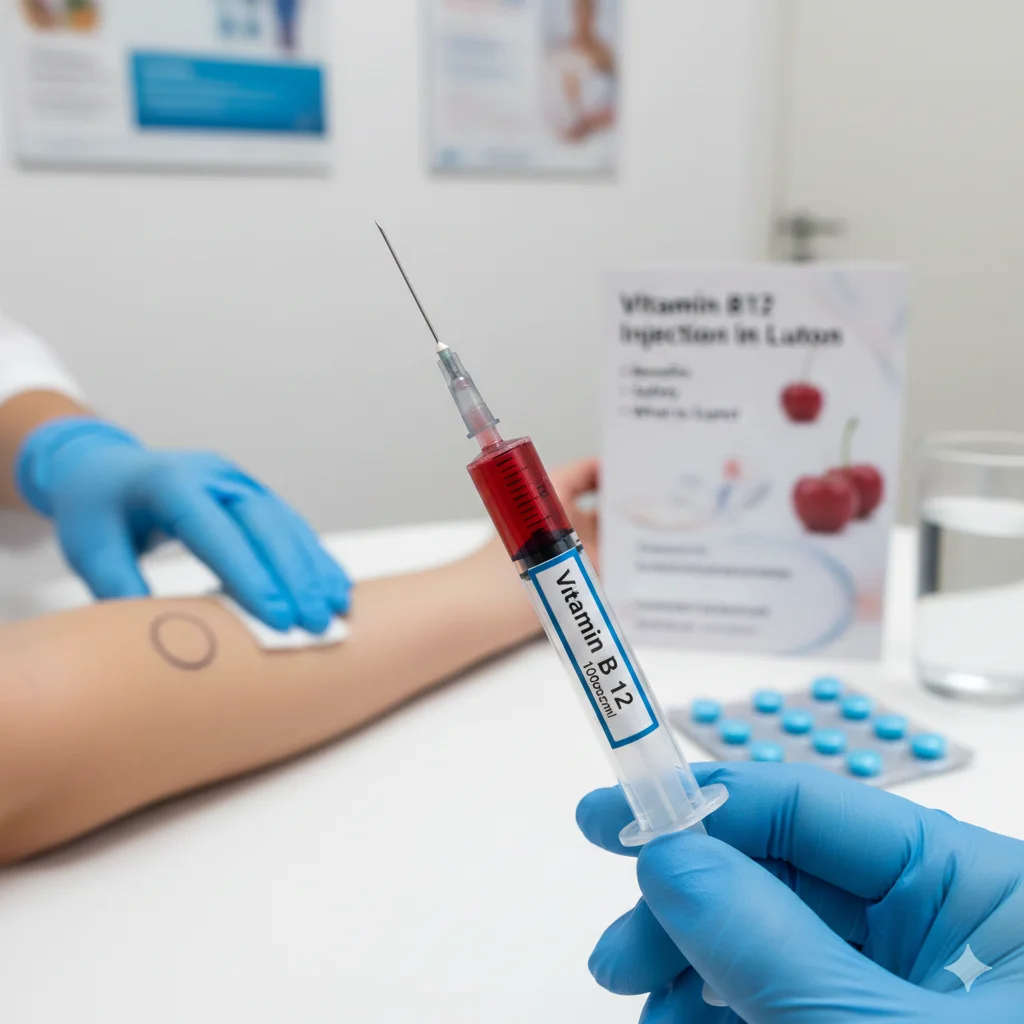
When an injection is given into a muscle, the needle can nick a small blood vessel. A little blood may then leak into the surrounding tissue and form a bruise. This can happen even when the injection has been given correctly.
The key point is that a small local bruise does not automatically mean you are allergic to vitamin B12 or that you have had a serious reaction. What matters more is whether the bruise is stable or improving, whether pain and swelling are settling, and whether you have any other symptoms.
What might a minor injection bruise look like?
A simple bruise is usually limited to the area around the injection. It may feel mildly tender and can change colour as it heals. The mark may look purple or blue at first and then become green, yellow or brown before fading. Colour changes alone do not tell you whether a bruise is serious.
Instead, watch the overall trend. A minor bruise should not keep expanding, become progressively more painful or be accompanied by persistent bleeding. If the skin becomes increasingly hot, painful and swollen, seek urgent GP advice or contact NHS 111 because those features can point to a skin infection rather than ordinary bruising.
How long should a small bruise last?
There is no B12-specific healing time for a bruise. General NHS bruising advice indicates that many simple bruises fade over around two weeks, although tenderness or colour changes can sometimes take longer to disappear completely.
If a bruise is not gradually improving, is still worsening after about two weeks, becomes larger or more painful, or you are unsure whether it looks normal, ask a pharmacist, GP or the healthcare professional who gave the injection for advice.
How to look after and monitor a small bruise
For a small uncomplicated bruise, the main aim is to watch that it is settling rather than repeatedly pressing or checking the area. A wrapped cold pack can be held gently against a new bruise for short periods to help with swelling. Do not put ice directly on the skin.
Over the next few days, look for the following changes:
- the bruise is staying the same size or getting smaller rather than spreading;
- pain and tenderness are easing rather than worsening;
- there is no new or increasing swelling or firm painful lump;
- there is no continued bleeding from the injection site;
- the skin is not becoming increasingly hot or swollen; and
- you are not developing other concerning symptoms such as a spreading rash, hives, dizziness, fever or feeling significantly unwell.
Follow any aftercare advice given by the pharmacist, nurse or clinician who administered the injection. If you were given medicine-specific information, use that alongside this general guidance.
Can medicines or health conditions make bruising more likely?
Yes. Intramuscular injections can cause bleeding or bruising at the injection site, and the risk can be higher in people taking medicines that affect blood clotting. NHS Specialist Pharmacy Service guidance notes that oral anticoagulants such as warfarin, apixaban, rivaroxaban, dabigatran or edoxaban can increase the chance of injection-site bleeding or bruising. Other medicines that affect bleeding risk, including antiplatelet medicines, can also be relevant.
Tell the healthcare professional about your medicines and any known bleeding disorder before an injection. A previous history of unusual bleeding or problems after intramuscular injections is also worth mentioning. Do not stop or change a prescribed anticoagulant or antiplatelet medicine because of a bruise without advice from the clinician responsible for that treatment.
When is bruising more concerning?
Ask for prompt medical advice if any of the following apply:
- the bruise is rapidly enlarging or there is a large amount of new bruising;
- pain or swelling is significant or getting worse;
- bleeding from the injection site does not stop with normal pressure;
- the area becomes painful, hot and swollen, especially if you also feel feverish or unwell;
- you take an anticoagulant or have a bleeding disorder and the bruising is more than you expected;
- you develop unexplained bruises elsewhere, frequent nosebleeds, bleeding gums, blood in your urine or stool, or other unusual bleeding; or
- the bruise is not improving and you are concerned about it.
If the problem feels urgent but is not life-threatening, NHS 111 can help direct you to the right service. Call 999 for a medical emergency.
Bruising is different from an allergic reaction
A bruise is a patch of bleeding under the skin. Other injection-site effects can include pain, swelling or itching. A spreading rash or hives is different and may represent an allergic reaction rather than simple bruising.
Hydroxocobalamin contains cobalt. If you have a known cobalt allergy, tell the healthcare professional before treatment. Seek urgent medical advice for a concerning rash or hives. Call 999 for signs of a serious allergic reaction such as swelling of the lips, mouth, tongue or throat, difficulty breathing or swallowing, severe dizziness or collapse.
B12 injection advice in Luton
If you are considering treatment locally, Biscot Pharmacy provides a vitamin B12 injection service in Luton subject to a pharmacist suitability assessment. The service page contains the current pharmacy contact details, eligibility information and appointment guidance.
If a bruise developed after an injection you received elsewhere, contact the healthcare professional or service that treated you if you need aftercare advice. Do not arrange another injection simply because you are worried about the appearance of a bruise; the next step should depend on the reason for treatment and your clinical plan.
Frequently asked questions
Is bruising normal after a B12 injection?
A small bruise can occur after an injection because the needle may damage tiny blood vessels under the skin. It should stay localised and gradually improve. Bruising is different from a spreading rash, marked swelling or ongoing bleeding.
How long should a small bruise last?
There is no fixed B12-specific healing time. Many simple bruises fade over around two weeks, although tenderness or colour changes can last longer. Ask for medical advice if the bruise is not improving, is getting larger or is becoming more painful.
When should bruising after a B12 injection be checked?
Get advice if the bruise is rapidly enlarging, there is significant or worsening pain or swelling, bleeding does not stop, the area becomes hot and swollen, or you feel unwell. NHS 111 can advise when the problem is urgent but not life-threatening.
Can medicines or health conditions make bruising more likely?
Yes. Medicines that affect blood clotting, including oral anticoagulants and antiplatelet medicines, can increase bleeding or bruising after an intramuscular injection. A history of bleeding problems can also matter. Do not stop or change prescribed medicines without advice from the clinician managing them.
Disclaimer
This page provides general information about bruising after an injection and does not diagnose a bleeding problem, infection or allergic reaction. Individual advice depends on the size and progression of the bruise, other symptoms, your medical history and the medicines you take. Seek urgent medical advice for worsening or concerning symptoms, and call 999 for a life-threatening emergency.



 the prescription app


