
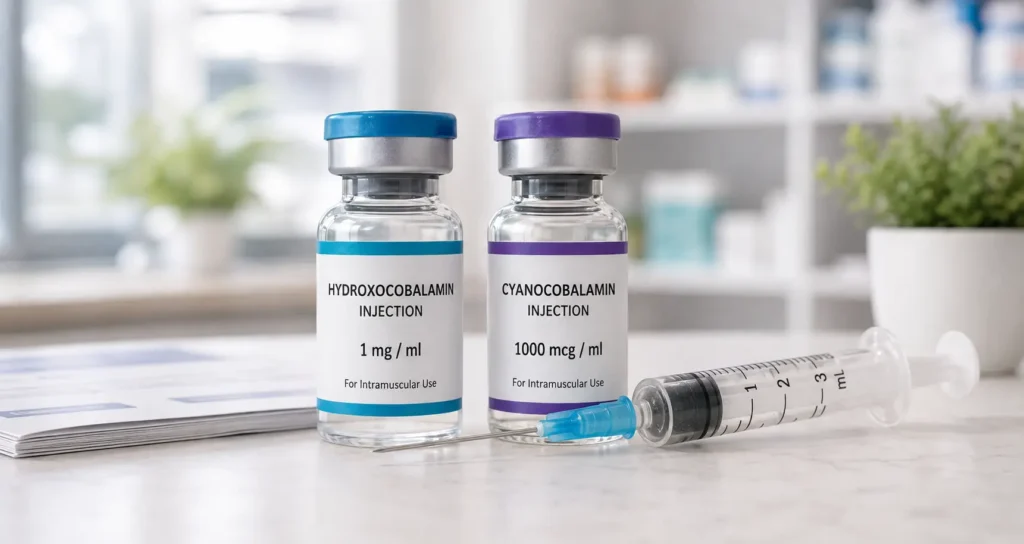
Hydroxocobalamin and cyanocobalamin are both forms of vitamin B12 used to treat or prevent vitamin B12 deficiency. In the UK, the NHS says hydroxocobalamin is preferred for vitamin B12 injections because it stays in the body for longer. Cyanocobalamin is also a recognised form of vitamin B12, but its role in current UK treatment is different: oral cyanocobalamin products remain available, while the cyanocobalamin injection Cytamen is currently listed as discontinued on the Electronic Medicines Compendium (eMC).
That does not mean one form is automatically “better” for every person or that every private clinic uses the same product. The correct treatment depends on the cause of deficiency, symptoms, medical history, previous treatment and the medicine actually supplied by the service.
What are hydroxocobalamin and cyanocobalamin?
Hydroxocobalamin and cyanocobalamin are cobalamin forms of vitamin B12. Vitamin B12 is needed for normal red blood cell formation and healthy nervous-system function. Deficiency can be caused by low dietary intake, reduced absorption, autoimmune gastritis, some gastrointestinal surgery, certain medicines or other medical conditions.
A hydroxocobalamin injection is given intramuscularly for vitamin B12 replacement. Current UK product information includes 1 mg/ml hydroxocobalamin injections. Cyanocobalamin can be used orally and has also been formulated for intramuscular injection. Both forms contain cobalt, which matters for people with a known cobalt allergy.
Why is a hydroxocobalamin injection preferred in the UK?
The NHS states that hydroxocobalamin is preferred to cyanocobalamin for vitamin B12 injections given in the UK because hydroxocobalamin stays in the body for longer. UK medicine information also describes hydroxocobalamin as better retained after injection than cyanocobalamin.
This longer retention can allow maintenance injections to be spaced further apart when intramuscular treatment is clinically appropriate. The exact schedule is not chosen simply from the name of the product; it depends on the cause of deficiency, neurological involvement, response to treatment and the clinician’s plan.
A hydroxocobalamin injection should therefore be understood as a clinical replacement medicine, not as a general energy booster. People with persistent fatigue, numbness, pins and needles, balance problems, memory changes or other possible deficiency symptoms may need assessment and testing rather than choosing an injection based on advertising.
How is a cyanocobalamin injection different?
Cyanocobalamin is another established form of vitamin B12. It can be used in oral preparations and has also been used as an injection. The eMC currently lists Cytamen 1000 micrograms/ml cyanocobalamin injection as discontinued. Its product information describes intramuscular use and shows that a smaller proportion of the injected dose is retained than with hydroxocobalamin.
This does not justify treating cyanocobalamin as an inferior vitamin in every context. Oral cyanocobalamin is still used, and the most appropriate form and route depend on why treatment is needed. Someone suitable for oral replacement may not need an injection at all.
Hydroxocobalamin injection vs cyanocobalamin injection: practical differences
· Both are forms of vitamin B12 used for replacement therapy.
· Hydroxocobalamin is the form the NHS says is preferred for injections in the UK.
· Hydroxocobalamin is retained for longer after injection, which is one reason maintenance intervals can be longer.
· Cyanocobalamin is widely recognised as an oral form and has historically been available as an injectable product in the UK; Cytamen injection is currently listed as discontinued on eMC.
· Both contain cobalt and can cause sensitivity reactions in people with cobalt allergy.
· Neither should be chosen solely because of fatigue, low energy or a desire for a general wellbeing boost.
Which B12 injection is better?
There is no useful universal answer to “which B12 injection is better?” For UK intramuscular vitamin B12 treatment, a hydroxocobalamin injection has the practical advantage of being preferred by the NHS and remaining in the body for longer. But the clinically important question is whether you need vitamin B12 replacement, whether an injection is the right route, and what treatment plan is suitable for the underlying cause.
For example, some diet-related deficiency can be treated with oral vitamin B12, while persistent malabsorption or particular surgical causes may require intramuscular replacement, sometimes long term. If you already have a prescribed treatment plan, do not switch from one form, route or schedule to another without speaking to the clinician responsible for your care. For a route-based comparison, read B12 injections vs tablets.
Do you need a blood test before choosing a B12 injection?
Symptoms such as tiredness, poor concentration, weakness, pins and needles or low mood are not specific to vitamin B12 deficiency. NICE recommends taking diagnostic blood samples before vitamin B12 replacement where possible because treatment can affect test interpretation. The clinical picture can be different when urgent neurological or haematological treatment is needed.
If you have not been diagnosed, recent results can be useful before a private appointment. Read whether a blood test may be needed before a B12 injection for more detail about when testing, GP assessment or urgent review may be appropriate.
Safety: cobalt allergy and side effects
The MHRA advises that both hydroxocobalamin and cyanocobalamin contain cobalt. People with a known cobalt allergy should tell the healthcare professional before treatment and watch for sensitivity reactions. These can include skin reactions and may start immediately or be delayed.
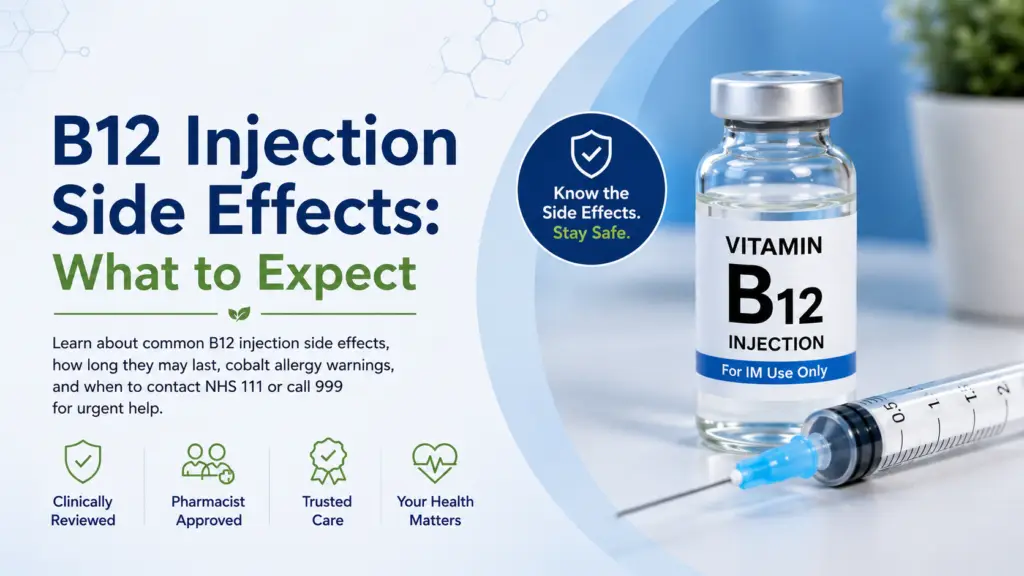
A hydroxocobalamin injection can also cause medicine-specific effects such as pain, swelling or itching at the injection site, nausea, diarrhoea, headache, dizziness or hot flushes. Serious allergic reactions are uncommon but require urgent help. Read the B12 injection side-effects guide for a fuller explanation of expected effects and warning signs.
Which form does Biscot Pharmacy use for its private B12 service?
Biscot Pharmacy’s current public B12 service page does not name the exact vitamin B12 formulation used for each appointment. It states that the pharmacist will explain the medicine being used, expected effects and medicine-specific side effects before treatment. The exact formulation should therefore be confirmed by the pharmacy rather than assumed from general UK guidance.
This distinction matters. It is accurate to say that hydroxocobalamin is the NHS-preferred injectable form in the UK; it is not accurate to state that Biscot Pharmacy uses hydroxocobalamin unless the pharmacy has confirmed that product for the service. If the pharmacy later publishes the exact formulation, this section and schema can be updated from that verified first-party information.
Private B12 injection assessment in Luton
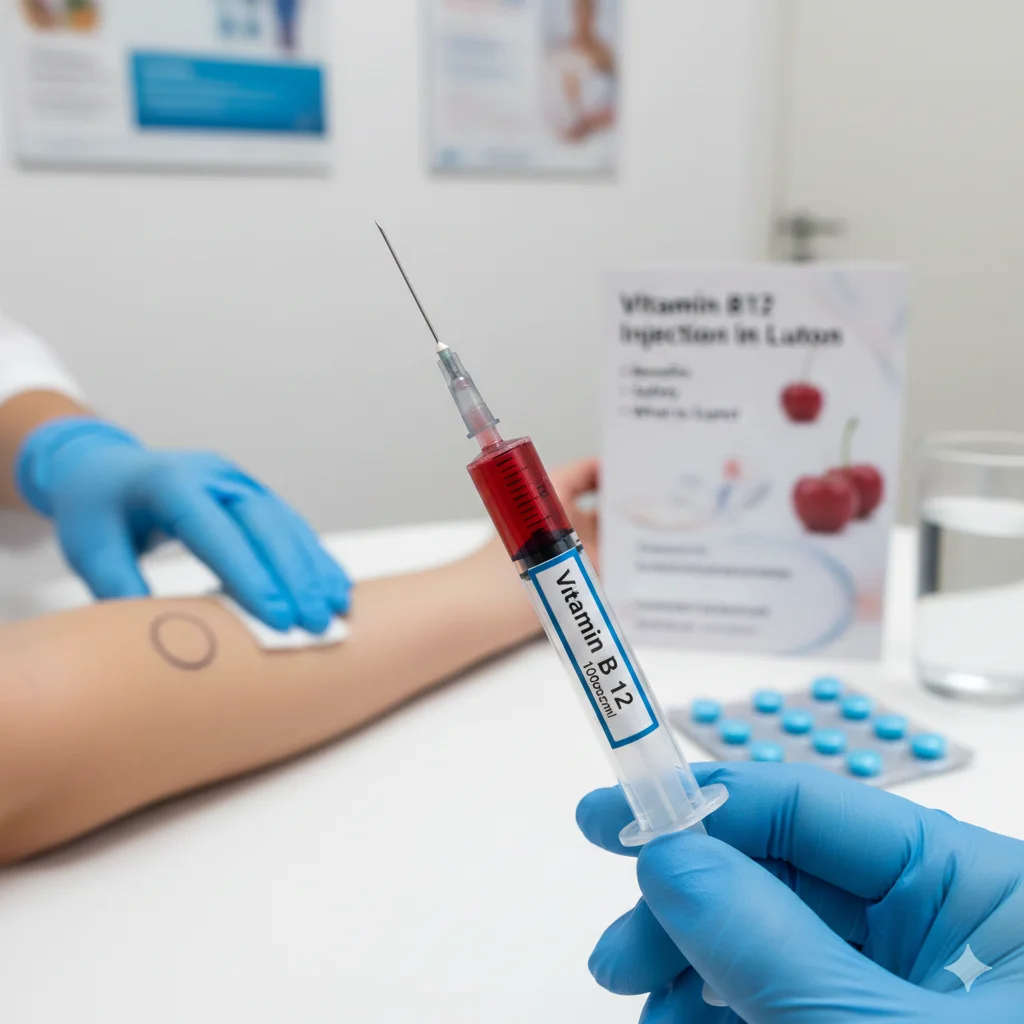
Biscot Pharmacy offers a private vitamin B12 injection service in Luton from £25, subject to a pharmacist suitability assessment. The appointment includes a private consultation, review of relevant symptoms, medical history, medicines and supplements, administration when clinically appropriate, and aftercare advice. Booking does not guarantee that an injection will be given.
If you are comparing B12 injection types because you are considering treatment, check the private vitamin B12 injection service in Luton for current service information. The pharmacist may recommend a blood test, GP assessment or another route if an injection is not suitable.
When to seek medical advice
Do not use a comparison between hydroxocobalamin and cyanocobalamin to self-diagnose vitamin B12 deficiency. Contact a GP if symptoms are persistent, worsening or unexplained, particularly if you have numbness, pins and needles, weakness, balance or walking problems, vision changes, memory or cognitive changes, breathlessness or palpitations.
Use NHS 111 for urgent medical advice when the situation is not immediately life-threatening. Call 999 for severe breathing difficulty, collapse, signs of a serious allergic reaction or another medical emergency.
Conclusion
For vitamin B12 injections in the UK, hydroxocobalamin is generally the preferred form because it stays in the body for longer. Cyanocobalamin is also a legitimate vitamin B12 medicine, but current UK use is more commonly associated with oral treatment, and the Cytamen cyanocobalamin injection is currently listed as discontinued on eMC.
The more important decision is whether vitamin B12 replacement is needed and whether an injection is the right route for you. A pharmacist, GP or other appropriate clinician should base that decision on symptoms, risk factors, testing, diagnosis and treatment history rather than on the product name alone.
Written by the Biscot Pharmacy Editorial Team.
Medically reviewed by Faisal Shafiq, Superintendent Pharmacist (GPhC 2067224).
Frequently asked questions
Which B12 injection is used in the UK?
The NHS says hydroxocobalamin is preferred for vitamin B12 injections in the UK because it stays in the body for longer.
Why is hydroxocobalamin preferred over cyanocobalamin for injections?
Hydroxocobalamin is retained in the body for longer after injection. This can support longer maintenance intervals when intramuscular treatment is appropriate.
Is cyanocobalamin the same as hydroxocobalamin?
No. Both are forms of vitamin B12, but they are different cobalamin compounds with different pharmacokinetic properties and current patterns of use.
Is cyanocobalamin injection available in the UK?
The eMC currently lists Cytamen 1000 micrograms/ml cyanocobalamin injection as discontinued. Oral cyanocobalamin products remain listed. Availability should be checked from current medicine and supplier information rather than assumed.
Do hydroxocobalamin and cyanocobalamin contain cobalt?
Yes. The MHRA advises that both forms contain cobalt. Tell a healthcare professional if you have a known cobalt allergy and seek advice if you develop a reaction.
Can I switch from cyanocobalamin to a hydroxocobalamin injection?
Do not change a prescribed vitamin B12 form, route or schedule without advice from the clinician responsible for your treatment. The correct plan depends on the cause of deficiency and your clinical circumstances.
Which B12 injection does Biscot Pharmacy use?
The current public service page does not state the exact formulation. The pharmacist should confirm the medicine used before treatment. Do not assume the service uses a specific product until Biscot Pharmacy publishes or confirms it.
Clinical information sources
NHS – Vitamin B12 or folate deficiency anaemia: treatment
NICE NG239 – Vitamin B12 deficiency in over 16s
MHRA – Vitamin B12 and cobalt allergy advice
eMC – Hydroxocobalamin 1 mg/ml Solution for Injection (SmPC)
eMC – Cytamen 1000 mcg Injection (SmPC; currently listed as discontinued)
Disclaimer
This page provides general information and does not diagnose vitamin B12 deficiency or recommend an individual treatment plan. Testing, GP assessment or specialist review may be needed. Do not start, stop, switch or change prescribed vitamin B12 treatment without professional advice. Private pharmacy service eligibility, price and availability can change, and an appointment does not guarantee treatment.



 the prescription app


